

As a reliable supplier of Inconel 718 plates, I understand the critical importance of corrosion testing in ensuring the quality and performance of these high - end alloy products. Inconel 718 is a nickel - chromium - molybdenum alloy known for its excellent mechanical properties and corrosion resistance, making it a popular choice in various industries such as aerospace, oil and gas, and nuclear power. In this blog, I will delve into the corrosion testing methods for Inconel 718 plates.
1. Salt Spray Testing
Salt spray testing, also known as salt fog testing, is one of the most common and widely used corrosion testing methods. It involves exposing the Inconel 718 plate samples to a controlled environment of salt - laden mist. The test chamber is usually maintained at a constant temperature, typically around 35°C, and a salt solution with a concentration of 5% sodium chloride is atomized to create the salt spray.
The principle behind salt spray testing is to simulate the corrosive effects of a marine or coastal environment. The salt particles in the spray can react with the surface of the Inconel 718 plate, causing corrosion. By observing the appearance of the plate surface over a specified period, we can evaluate its corrosion resistance.
During the test, we carefully monitor the time it takes for the first signs of corrosion, such as rust spots or discoloration, to appear on the plate surface. The longer it takes for corrosion to occur, the better the corrosion resistance of the Inconel 718 plate. Salt spray testing is relatively simple and cost - effective, but it has some limitations. It provides a qualitative assessment of corrosion resistance and may not accurately represent the actual corrosion behavior in real - world applications.
2. Immersion Testing
Immersion testing involves fully immersing the Inconel 718 plate samples in a corrosive solution. The choice of the corrosive solution depends on the specific application environment of the plate. For example, if the plate is intended for use in an acidic environment, we may use a sulfuric acid or hydrochloric acid solution; if it is for a marine environment, a seawater - like solution can be used.
The immersion time can vary from a few days to several months, depending on the requirements of the test. During the immersion period, we regularly measure the weight loss of the plate samples. A lower weight loss indicates better corrosion resistance. We also examine the surface morphology of the plates using techniques such as scanning electron microscopy (SEM) to understand the corrosion mechanism.
Immersion testing can provide more accurate information about the corrosion rate and the type of corrosion (e.g., uniform corrosion, pitting corrosion) compared to salt spray testing. However, it is a time - consuming process and requires careful control of the test conditions, such as the temperature, concentration of the solution, and agitation rate.
3. Electrochemical Testing
Electrochemical testing is a more advanced and quantitative method for evaluating the corrosion resistance of Inconel 718 plates. It is based on the principle of electrochemistry, which describes the relationship between electrical currents and chemical reactions at the metal - electrolyte interface.
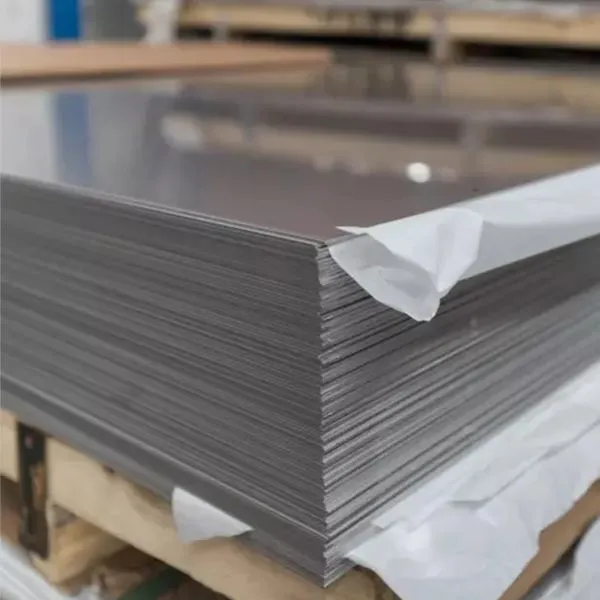

One of the most commonly used electrochemical testing techniques is potentiodynamic polarization. In this test, a small electrical potential is applied to the Inconel 718 plate sample, and the resulting current is measured as the potential is gradually increased. By analyzing the polarization curve, we can determine important electrochemical parameters such as the corrosion potential (Ecorr), the corrosion current density (icorr), and the polarization resistance (Rp).
The corrosion potential indicates the tendency of the metal to corrode, while the corrosion current density is directly related to the corrosion rate. A more positive corrosion potential and a lower corrosion current density suggest better corrosion resistance. Polarization resistance is inversely proportional to the corrosion rate and can be used to calculate the corrosion rate using appropriate equations.
Another electrochemical testing method is electrochemical impedance spectroscopy (EIS). EIS measures the electrical impedance of the metal - electrolyte system over a range of frequencies. The impedance spectrum provides information about the electrochemical processes occurring at the metal surface, such as charge transfer, diffusion, and film formation. By analyzing the EIS data, we can gain a deeper understanding of the corrosion mechanism and the protective properties of the passive film on the Inconel 718 plate surface.
Electrochemical testing offers several advantages, including high sensitivity, real - time monitoring, and the ability to provide quantitative data. However, it requires specialized equipment and trained personnel, and the test results can be affected by various factors such as the surface condition of the sample, the composition of the electrolyte, and the test environment.
4. Intergranular Corrosion Testing
Inconel 718 plates may be susceptible to intergranular corrosion, which occurs along the grain boundaries of the metal. Intergranular corrosion can significantly reduce the mechanical properties and integrity of the plate. To evaluate the intergranular corrosion resistance of Inconel 718 plates, we use specific testing methods.
One of the commonly used methods is the Strauss test. In this test, the plate samples are first sensitized by heat treatment to promote the precipitation of carbides at the grain boundaries. Then, the samples are immersed in a boiling solution of copper sulfate - sulfuric acid for a specified period. After the immersion, the samples are bent, and the presence of cracks along the grain boundaries is examined. If no cracks are observed, the plate has good intergranular corrosion resistance.
Another method is the Huey test, which is used to evaluate the resistance of stainless steels and nickel - based alloys to intergranular corrosion in a boiling nitric acid solution. The samples are weighed before and after the test, and the weight loss is measured. A low weight loss indicates good intergranular corrosion resistance.
Importance of Corrosion Testing for Our Inconel 718 Plates
As a supplier of Inconel 718 plates, corrosion testing is an integral part of our quality control process. By conducting comprehensive corrosion testing, we can ensure that our plates meet the high - quality standards required by our customers. Our Inconel 718 plates are used in demanding applications where corrosion resistance is crucial for safety and performance.
For example, in the aerospace industry, Inconel 718 plates are used in engine components and structural parts. Corrosion in these components can lead to mechanical failures, which can have serious consequences. By providing plates with excellent corrosion resistance, we help our aerospace customers ensure the reliability and longevity of their aircraft.
In the oil and gas industry, Inconel 718 plates are used in offshore platforms, pipelines, and downhole equipment. These applications are exposed to harsh environments, including seawater, high - pressure gases, and corrosive chemicals. Our corrosion - resistant plates can withstand these conditions, reducing the risk of equipment failure and costly downtime.
Related Products
In addition to Inconel 718 plates, we also offer other high - quality alloy products, such as Incoloy 825 Fastener, Inconel 600 Sheet, and Inconel 600 Bar. These products also undergo rigorous corrosion testing to ensure their quality and performance.
Contact Us for Purchase and Consultation
If you are interested in our Inconel 718 plates or other alloy products, we welcome you to contact us for purchase and consultation. Our team of experts is ready to provide you with detailed product information, technical support, and customized solutions to meet your specific requirements. We are committed to providing high - quality products and excellent customer service. Don't hesitate to reach out to us to start a fruitful cooperation.
References
- Uhlig, H. H., & Revie, R. W. (2010). Corrosion and Corrosion Control: An Introduction to Corrosion Science and Engineering. Wiley - Interscience.
- ASTM International. (2019). ASTM Standards on Corrosion Testing and Evaluation. ASTM International.
- Fontana, M. G. (1986). Corrosion Engineering. McGraw - Hill.