

Hey there! As a supplier of duplex stainless steel, I often get asked about the biocompatibility of this amazing material. So, let's dive right in and explore what biocompatibility means for duplex stainless steel.
First off, what is biocompatibility? In simple terms, biocompatibility refers to how well a material can interact with living tissues without causing any harmful effects. When it comes to medical applications, this is super important. You don't want a material that's going to trigger an immune response or cause damage to the body.
Duplex stainless steel is a unique alloy that combines the best of both austenitic and ferritic stainless steels. It has a two - phase microstructure, which gives it some really cool properties. In terms of biocompatibility, it's got a lot going for it.
One of the key factors contributing to the biocompatibility of duplex stainless steel is its corrosion resistance. You see, when a material corrodes in the body, it can release harmful metal ions. These ions can cause all sorts of problems, like inflammation, tissue damage, and even allergic reactions. Duplex stainless steel, with its high chromium and molybdenum content, forms a passive oxide layer on its surface. This layer acts as a barrier, preventing the metal from reacting with the surrounding biological environment.
Let's take a closer look at some of the common types of duplex stainless steel we offer. We've got the 2205 Stainless Steel Sheet. This is a widely used grade in various industries, including medical. It has good mechanical properties and excellent corrosion resistance in many environments. In the human body, it can withstand the physiological fluids and remain stable for a long time.

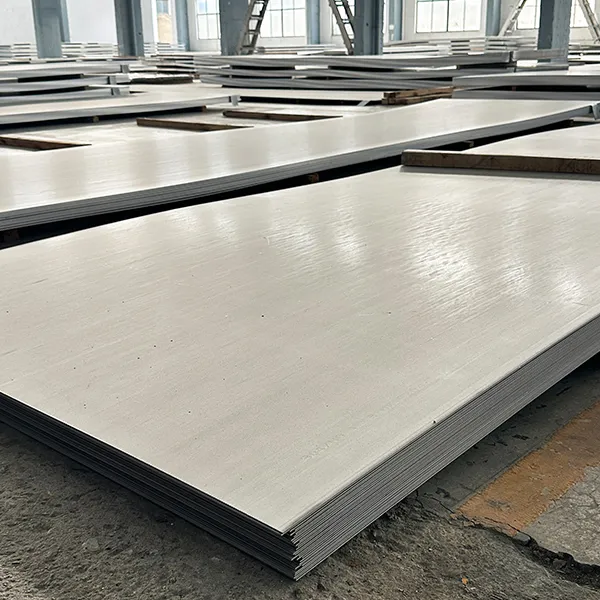
Another great option is the 904L Stainless Steel Sheet. This grade has a higher nickel content, which further enhances its corrosion resistance. It's often used in more demanding applications where the biological environment is particularly harsh. For example, in some implantable medical devices, 904L can provide long - term stability and biocompatibility.
And then there's the 2507 Stainless Steel Sheet. This is a super duplex stainless steel with even higher levels of chromium, molybdenum, and nitrogen. It offers outstanding corrosion resistance, especially in chloride - containing environments. In the body, where there are various salts and electrolytes, 2507 can hold up really well, reducing the risk of corrosion - related issues.
But it's not just about corrosion resistance. The mechanical properties of duplex stainless steel also play a role in its biocompatibility. In medical applications, materials need to be strong enough to withstand the mechanical stresses in the body. For example, in orthopedic implants, the material has to support the weight of the body and the forces generated during movement. Duplex stainless steel has high strength and good ductility, which means it can deform to some extent without breaking. This makes it suitable for use in load - bearing applications.
Another aspect is the surface finish of the duplex stainless steel. A smooth surface finish can reduce the adhesion of bacteria and other microorganisms. In the body, the presence of bacteria can lead to infections, which are a major concern in medical applications. By ensuring a high - quality surface finish on our duplex stainless steel products, we can help minimize the risk of bacterial adhesion and subsequent infections.
Now, let's talk about some real - world applications of duplex stainless steel in the medical field. It's used in things like surgical instruments. These instruments need to be sterile, corrosion - resistant, and strong. Duplex stainless steel meets all these requirements. It can be easily sterilized using standard methods, and its corrosion resistance ensures that it doesn't degrade over time, even after repeated use and cleaning.
It's also used in some implantable devices, such as bone plates and screws. These devices need to integrate well with the surrounding bone tissue. The biocompatibility of duplex stainless steel allows for a relatively good interaction with the bone, promoting healing and long - term stability.
However, it's important to note that while duplex stainless steel has excellent biocompatibility, it's not a one - size - fits - all solution. Different medical applications have different requirements, and sometimes other materials might be more suitable. For example, in some cases where a very high level of flexibility is needed, polymers might be a better choice. But for many applications where strength and corrosion resistance are key, duplex stainless steel is a top - notch option.
If you're in the medical industry or any other field where biocompatibility is important, and you're looking for high - quality duplex stainless steel products, we're here to help. We have a wide range of grades and products to meet your specific needs. Whether you need a small quantity for a research project or a large order for mass production, we can provide you with the right duplex stainless steel at a competitive price.
So, if you're interested in learning more about our duplex stainless steel products or want to discuss your specific requirements, don't hesitate to reach out. We'd love to have a chat with you and see how we can assist you in your procurement process.
In conclusion, duplex stainless steel offers excellent biocompatibility thanks to its corrosion resistance, mechanical properties, and surface finish. It has a wide range of applications in the medical field and other industries where interaction with living tissues is a concern. If you're in the market for duplex stainless steel, give us a shout, and let's start the conversation!
References
- "Duplex Stainless Steels" by ASM International
- "Biomaterials Science: An Introduction to Materials in Medicine" by Buddy D. Ratner et al.