

Hey there! As a supplier of duplex stainless steel, I'm super stoked to chat with you about what the forging of duplex stainless steel is all about. It's a pretty fascinating process, and it plays a huge role in the quality and performance of the products we offer.
First off, let's talk a bit about what duplex stainless steel is. Duplex stainless steel is a type of stainless steel that has a two - phase microstructure, consisting of both austenite and ferrite. This unique combination gives it some really cool properties. It's got high strength, which means it can handle a lot of stress and pressure without deforming. It also has excellent corrosion resistance, making it a great choice for all sorts of applications, especially those in harsh environments like chemical processing plants, offshore oil and gas platforms, and desalination plants.
Now, onto the forging part. Forging is a manufacturing process where we shape metal by applying compressive forces. In the case of duplex stainless steel, forging is a crucial step in turning raw materials into useful products.
The forging process of duplex stainless steel starts with the selection of the right raw materials. We need to make sure that the chemical composition of the stainless steel meets the required standards. Different grades of duplex stainless steel have different amounts of elements like chromium, nickel, molybdenum, and nitrogen. These elements are what give the steel its unique properties. For example, chromium helps with corrosion resistance, while nickel and molybdenum enhance strength and toughness.
Once we've got the right raw materials, the next step is heating. We heat the duplex stainless steel to a specific temperature range. This is important because at the right temperature, the steel becomes more malleable, which means it can be shaped more easily. The heating process needs to be carefully controlled. If the temperature is too low, the steel won't be soft enough to be forged, and it might crack during the process. On the other hand, if the temperature is too high, the microstructure of the steel can be damaged, and its properties will be affected.
After heating, we move on to the actual forging step. There are different types of forging methods that we can use. One common method is open - die forging. In open - die forging, the metal is placed between two flat or shaped dies, and a force is applied to shape the metal. This method is great for making simple shapes like bars and blocks. Another method is closed - die forging. In closed - die forging, the metal is placed in a die cavity that has the exact shape of the final product. As the dies come together, the metal is forced to fill the cavity, creating a precise shape. Closed - die forging is often used for making more complex parts.
During the forging process, we also need to pay attention to the deformation rate. The deformation rate refers to how quickly we apply the force to shape the metal. A proper deformation rate is necessary to ensure that the steel is forged evenly and that its microstructure remains intact. If the deformation rate is too fast, the steel might crack. If it's too slow, the steel might cool down too much and become difficult to forge.

After forging, the duplex stainless steel products go through a heat treatment process. Heat treatment is used to relieve the internal stresses that are created during forging and to improve the mechanical properties of the steel. There are different types of heat treatments, such as annealing, quenching, and tempering. Annealing is a process where the steel is heated to a specific temperature and then slowly cooled. This helps to soften the steel and relieve internal stresses. Quenching involves rapidly cooling the steel, which can increase its hardness. Tempering is done after quenching to reduce the brittleness of the steel and improve its toughness.
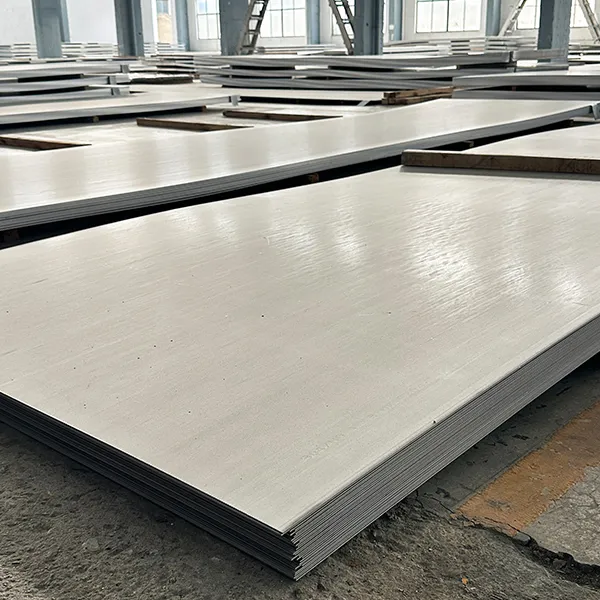
One of the great things about duplex stainless steel forgings is the wide range of products we can make. We can produce all sorts of items, from simple bars and sheets to complex components for industrial machinery. For example, we offer 2507 Stainless Steel Sheet, which is a high - performance grade of duplex stainless steel. It's known for its excellent corrosion resistance and high strength, making it suitable for applications in the chemical and petrochemical industries. Another product we have is the 904L Stainless Steel Sheet. This grade of stainless steel has a high content of nickel and molybdenum, which gives it outstanding resistance to corrosion in a variety of aggressive environments. And if you're looking for a strong and durable bar, our S32760 Stainless Steel Bar is a great choice. It's often used in offshore and marine applications due to its high strength and excellent corrosion resistance.
When it comes to the benefits of using forged duplex stainless steel products, there are quite a few. First of all, as I mentioned earlier, they have high strength. This means that you can use less material to achieve the same level of performance, which can save you money. Second, the corrosion resistance of duplex stainless steel forgings is top - notch. This reduces the need for frequent maintenance and replacement, which also saves you time and money in the long run. Third, forged duplex stainless steel products have good weldability. This makes it easier to join different parts together, which is important in many manufacturing processes.
If you're in the market for duplex stainless steel products, whether it's sheets, bars, or custom - made components, I'd love to talk to you. We've got the expertise and the resources to provide you with high - quality forged duplex stainless steel products that meet your specific requirements. Whether you're a small business looking for a few pieces or a large corporation in need of a bulk order, we can help.
Don't hesitate to reach out and start a conversation about your procurement needs. We're here to work with you to find the best solutions for your projects.
References:
- ASM Handbook, Volume 14A: Metalworking: Forging. ASM International.
- Duplex Stainless Steels: Properties and Applications. A technical publication by leading stainless steel manufacturers.