

Stainless steel forgings are widely used in various industries due to their excellent corrosion resistance, high strength, and good formability. However, in some applications, the surface hardness of stainless steel forgings may need to be improved to enhance wear resistance, reduce friction, and extend service life. As a professional stainless steel forging supplier, we have extensive experience and advanced technology in improving the surface hardness of stainless steel forgings. In this blog, we will discuss several effective methods to achieve this goal.
1. Heat Treatment
Heat treatment is one of the most common and effective methods to improve the surface hardness of stainless steel forgings. By heating the forgings to a specific temperature and then cooling them at a controlled rate, the microstructure of the stainless steel can be changed, resulting in increased hardness.
Annealing
Annealing is a heat treatment process that involves heating the stainless steel forgings to a high temperature and then slowly cooling them. This process can relieve internal stresses, refine the grain structure, and improve the ductility of the material. Although annealing generally reduces the hardness of stainless steel, it can be used as a pre - treatment step before other hardening processes.
Quenching and Tempering
Quenching is a rapid cooling process that involves heating the stainless steel forgings to a critical temperature and then quickly cooling them in a quenching medium such as water, oil, or air. This process can transform the austenite phase of stainless steel into martensite, which has a high hardness. However, quenched stainless steel is often very brittle, so tempering is usually required. Tempering is a subsequent heat treatment process that involves heating the quenched forgings to a lower temperature and holding them for a certain period of time. This process can reduce the brittleness of the material while maintaining a relatively high hardness.
2. Surface Hardening Treatments
Surface hardening treatments are designed to increase the hardness of the surface layer of stainless steel forgings while keeping the core material relatively soft and tough.
Carburizing
Carburizing is a process in which carbon is introduced into the surface layer of the stainless steel forgings. The forgings are heated in a carbon - rich environment, such as a gas or solid carburizing medium, at a high temperature. The carbon diffuses into the surface of the stainless steel, forming a high - carbon layer. After carburizing, the forgings are usually quenched and tempered to achieve the desired hardness. Carburizing can significantly improve the wear resistance and surface hardness of stainless steel forgings.
Nitriding
Nitriding is a surface hardening process in which nitrogen is introduced into the surface layer of the stainless steel forgings. There are several types of nitriding processes, including gas nitriding, plasma nitriding, and salt bath nitriding. In gas nitriding, the forgings are heated in a nitrogen - containing gas atmosphere at a relatively low temperature. The nitrogen reacts with the alloying elements in the stainless steel to form hard nitride compounds on the surface. Nitriding can improve the surface hardness, wear resistance, and corrosion resistance of stainless steel forgings without significantly changing the dimensional accuracy of the parts.
3. Coating and Deposition
Applying a hard coating or deposition on the surface of stainless steel forgings is another effective way to improve the surface hardness.
Physical Vapor Deposition (PVD)
Physical Vapor Deposition is a process in which a thin film of hard material, such as titanium nitride (TiN), chromium nitride (CrN), or diamond - like carbon (DLC), is deposited on the surface of the stainless steel forgings. In PVD, the coating material is vaporized in a vacuum chamber and then deposited onto the surface of the forgings. PVD coatings can provide excellent wear resistance, low friction coefficients, and good corrosion resistance.
Chemical Vapor Deposition (CVD)
Chemical Vapor Deposition is a process in which a chemical reaction occurs in a gas phase to deposit a hard coating on the surface of the stainless steel forgings. CVD coatings are usually thicker and harder than PVD coatings, but they require higher deposition temperatures, which may cause thermal distortion of the forgings.
4. Cold Working
Cold working is a process in which the stainless steel forgings are deformed at room temperature. This process can increase the dislocation density in the material, resulting in work hardening and increased surface hardness. Cold working methods include rolling, forging, and drawing. However, cold working can also reduce the ductility of the material, so it needs to be carefully controlled.
Selection of the Appropriate Method
The choice of the method to improve the surface hardness of stainless steel forgings depends on several factors, such as the type of stainless steel, the required hardness level, the size and shape of the forgings, and the cost. For example, if high - precision parts with a thin hard layer are required, PVD coating may be a good choice. If large - scale forgings need to be hardened, heat treatment methods such as quenching and tempering may be more suitable.

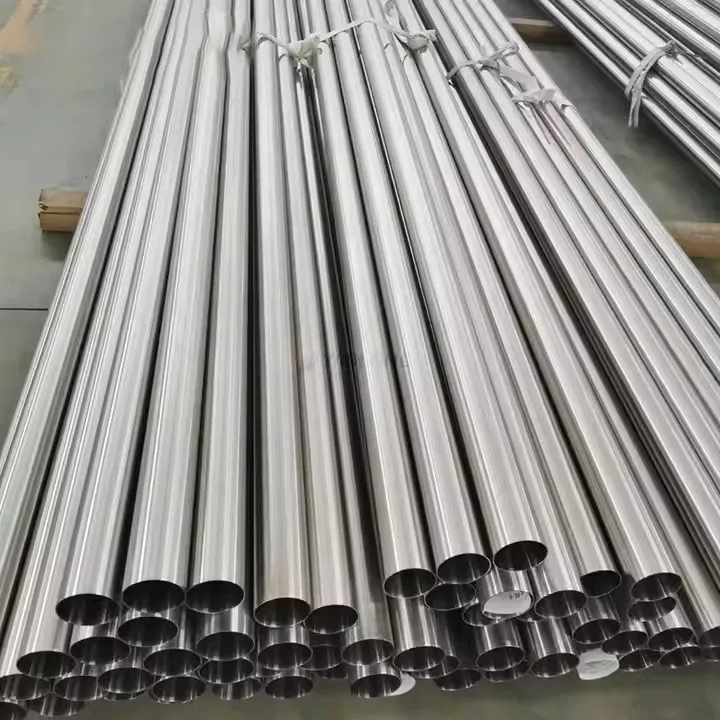
As a stainless steel forging supplier, we offer a wide range of products, including Stainless Steel Coil Plate, Hot Rolled Stainless Steel Plate, and 304 Round Stainless Steel Pipe /Tube. We have a professional technical team that can help you select the most appropriate method to improve the surface hardness of your stainless steel forgings according to your specific requirements.
If you are interested in our products or need more information about improving the surface hardness of stainless steel forgings, please feel free to contact us for procurement negotiation. We are committed to providing you with high - quality products and excellent service.
References
- ASM Handbook Volume 4: Heat Treating. ASM International.
- Metals Handbook Desk Edition, Third Edition. ASM International.
- Surface Engineering for Corrosion and Wear Resistance. Elsevier.