

Company Profile
Wuxi xinfutian metal products co., ltd. Was established in the 20th century and now is a great manufacturing enterprise that integrates research and development, production, and sales departments. We has several large warehousing bases. We mainly produce stainless steel pipes, plates, coils, rods, pipe fittings, high nickel alloy steel products, high-temperature resistant products, carbon steel, galvanizing products, and also supply oem&odm services. All our products are supplied in accordance with din/en, astm/asme, din, jis standards, and our products are widely used in fields such as petrochemical, oil and gas, marine engineering, shipbuilding, boiler heat exchangers, aerospace, environmental protection equipment, mechanical processing, automobiles, hydropower, nuclear power, refrigeration, new energy equipment, etc. At present, our stocked stainless steel products is about 20000 tons. Our company has been certified by some internationally renowned certification bodies, and get certifications as iso9001, ts16949, bvsgs, etc. Our products are widely used in various fields and have supplied service more than ten years for customers from various regions as africa, europe, and america, etc. Welcome all users, manufacturers, or traders to cooperate with us.
Why Choose Us
Our history
Wuxi xinfutian metal products co., ltd. Was established in the 20th century and now is a great manufacturing enterprise that integrates research and development, production, and sales departments.
Product application
Aerospace and aviation,medical and healthcare,automotive manufacturing,construction and architecture,petrochemical industry,energy sector,food processing and catering,marine applications,water treatment and desalination.
Our certifications
Our company has been certified by some internationally renowned certification bodies, and get certifications as iso9001, ts16949, bvsgs, etc.
Our service
We will answer your questions online 24 hours a day with fast response time to help you choose products.If there is a problem with the product, we will take timely measures to solve it.
Related Product

Stainless Steel Cold Rolled Coil
Stainless steel cold rolled coil is versatile and widely used products known for their excellent properties, making them essential in various industries. These coils undergo a cold rolling process, resulting in improved surface finish, dimensional accuracy, and mechanical properties compared to hot rolled coils.

Stainless Steel Hot Rolled Coil
Stainless steel hot rolled coils are integral components in various industries, valued for their exceptional properties and versatility. These coils undergo a hot rolling process, resulting in improved mechanical properties and reduced thickness compared to cold rolled coils.

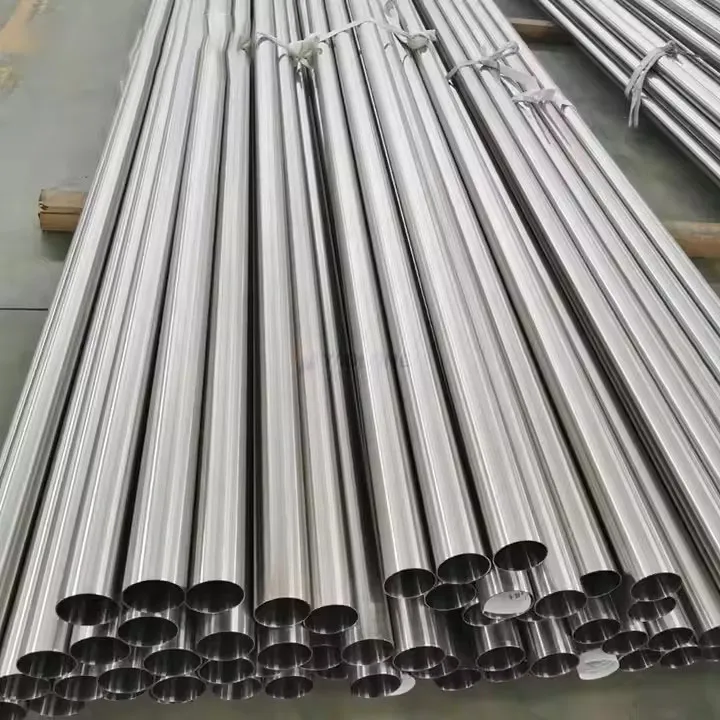
The seamless stainless steel tube, a robust and versatile material, is made from an alloy that combines elements like iron, carbon, nickel, and chromium. Because it's made without a welded seam, it offers superior pressure resistance and can be used in a variety of heavy-duty applications.

Stainless steel welded tube is a hollow, long steel billet which is produced by rolling, forming and welding. It's favored for its lower cost and versatility in a variety of applications that require tubing with specific shapes and sizes.

Hot Rolled Stainless Steel Plate
Hot rolled stainless steel plate is a flat product obtained after rolling stainless steel slabs at high temperatures. It's well-known for its scaling resistance, strength at high temperatures, and good weldability, making it pivotal in construction, heavy industry, and transportation.

Cold Rolled Stainless Steel Sheet
Cold rolled stainless steel sheet is produced through the cold rolling process, which involves rolling stainless steel at room temperature to achieve a smoother surface and a more precise size and thickness. This material is sought after for its superior finish, tight tolerances, and strength, making it ideal for applications in the medical, automotive, and electronics industries.

Stainless steel pipe casting, a specialized method of forming stainless steel pipes, involves pouring molten stainless steel into a mold to get a desired shape and size. This process is especially useful for producing complex shapes and sizes that might be challenging or uneconomical to achieve through traditional rolling and welding methods. It's widely used in industries such as automotive, construction, and chemical processing, where custom specifications are often needed.

Stainless steel coil plate, commonly referred to as coil plates or coils, is manufactured in a process that involves rolling stainless steel at high temperatures into long strips, which are then wound into coils. These coils are known for their versatility, high corrosion resistance, and superb formability, making them suitable for a multitude of applications in varying industries, such as the automotive, construction, and chemical sectors.

Stainless steel bar grating is a series of load-bearing bars made from stainless steel, joined together at various intervals to form a grid. It is widely used in industrial and architectural applications due to its durability, strength, corrosion resistance, and non-slip properties. Stainless steel grating provides a reliable and long-lasting solution for platforms, walkways, drainage covers, and ventilation grates.
What is Seamless Stainless Steel Tube?
A seamless stainless steel tube is a tubular component that draws or extrudes a steel blank through a die. Without any joints or welding, a seamless pipe is perfect for applications that require high pressure or extreme temperatures because it does not suffer from the stress concentration or weak spots of a welded pipe. Seamless pipes are usually manufactured in smaller diameters, up to 24 inches, and a range of wall thicknesses consistent with the needs of the intended use.
Advantages of Seamless Stainless Steel Tube
Good corrosion resistance
Seamless stainless steel pipes are made of stainless steel and have good corrosion resistance, and can still maintain good performance in harsh environments such as moisture, acidity, and alkalinity.
High temperature and pressure resistance
Seamless stainless steel pipes can withstand high temperature and high pressure environments and are especially suitable for high-end fields such as petrochemicals and electric power.
High dimensional accuracy
Seamless stainless steel pipes have strict manufacturing process requirements, have high dimensional accuracy and surface quality, and can be used in the manufacturing of precision machinery and equipment. It has good applications in some occasions that require higher accuracy.
Good fluidity
The inner surface of seamless stainless steel pipe is smooth, the friction is small, and the fluid performance is good, which can make the pipeline fluid transmission more stable and efficient.
Types of Seamless Stainless Steel Tube
304/304l stainless steel
These are the most widely used stainless steel pipes. They offer good corrosion resistance, formability, and weldability. They are commonly used in various industries including food processing, pharmaceuticals, and architectural applications.
316/316l stainless steel
These pipes offer enhanced corrosion resistance, especially in environments with exposure to chloride-containing substances. They are often used in marine applications, chemical processing, and high-corrosion environments.
321/321h stainless steel
These pipes contain titanium, which stabilizes the structure against sensitization and intergranular corrosion. They are suitable for high-temperature applications and are often used in heat exchangers and exhaust systems.
409 stainless steel
Known for its good heat resistance and corrosion resistance, it's often used in automotive exhaust systems and other applications requiring resistance to high-temperature gases.
430 stainless steel
This type is known for its excellent corrosion resistance and formability. It's commonly used in decorative applications, appliances, and automotive trims.
410 stainless steel
Offers good corrosion resistance and moderate strength. It's used in applications like cutlery, surgical instruments, and steam turbines.
420 stainless steel
Contains higher carbon content for enhanced strength and hardness. It's used in applications requiring wear resistance, such as surgical tools, bearings, and valves.
2205 duplex stainless steel
Combines the properties of austenitic and ferritic stainless steels, offering high strength and excellent corrosion resistance. It's used in industries like chemical processing, oil and gas, and desalination.
The Production Process of Seamless Stainless Steel Tube
Hot rolled (extruded) seamless steel pipe
Round tube billet → heating → piercing → three-roll cross rolling, continuous rolling or extrusion → tube removal → sizing (or reducing) → cooling → straightening → hydraulic test (or non-destructive flaw detection) → mark → warehousing.
The raw material for rolling seamless pipes is round pipe blanks. The round pipe blanks are cut by a cutting machine into a billet with a length of about 1 meter, and then sent to the furnace for heating via a conveyor belt. The billet is fed into the furnace and heated at a temperature of approximately 1200 degrees celsius. The fuel is hydrogen or acetylene. The temperature control in the furnace is a key issue. After the round billet is out of the furnace, it must be pierced through a pressure punching machine. Generally, the more common piercing machine is the tapered roller piercing machine. This type of piercing machine has high production efficiency, good product quality, large perforation diameter expansion, and can wear a variety of steel types.
After piercing, the round tube billet is cross-rolled, continuously rolled or squeezed by three rolls. After squeezing, take off the tube and calibrate. The sizing machine uses a tapered drill bit to rotate at a high speed into the steel blank to punch holes to form a steel pipe. The inner diameter of the steel pipe is determined by the length of the outer diameter of the drill bit of the sizing machine. After the steel pipe is sized, it enters the cooling tower and is cooled by spraying water. After the steel pipe is cooled, it will be straightened. After straightening, the steel pipe is sent to the metal flaw detector (or hydraulic test) by the conveyor belt for internal flaw detection. If there are cracks, bubbles, etc. Inside the steel pipe, it will be detected. After the quality inspection of steel pipes, strict manual selection is required. After the quality inspection of the steel pipe, paint the serial number, specification, production batch number, etc. With paint. It is hoisted into the warehouse by a crane.
Cold rolled (drawn) seamless steel pipe
Round tube blank → heating → piercing → heading → annealing → pickling → oiling (copper plating) → multi-pass cold drawing (cold rolling) → billet tube → heat treatment → straightening →hydraulic test (flaw detection)→marking→warehousing.
The rolling method of cold rolled (drawn) seamless steel pipe is more complicated than that of hot rolled (extruded seamless steel pipe). The first three steps of their production process are basically the same. The difference starts from the fourth step. After the round tube blank is emptied, it needs to be headed and annealed. After annealing, use a special acid liquid for pickling. After pickling, apply oil. Then it is followed by multiple passes of cold drawing (cold rolling) and then billeting and special heat treatment. After heat treatment, it will be straightened.
How to Choose the Material of Seamless Steel Pipe
The importance of structure
For important structures such as heavy-duty industrial building structures, large-span structures, high-rise or super-high-rise civil building structures or structures, good quality seamless steel pipes should be considered. For general industrial and civil building structures, ordinary quality seamless steel pipes can be selected according to the nature of the work.
Load situation
For structures that directly bear dynamic loads and structures in areas with strong earthquakes, seamless carbon steel steel pipe with good comprehensive performance should be used; for structures that generally bear static loads, seamless steel pipes with lower prices can be used.
Connection method
The welding process will produce welding deformation, welding stress and other welding defects, and there is a danger of causing cracks or brittle fractures in the structure. Therefore, the material requirements of the welded structure should be stricter.
The temperature and environment where the structure is located
Seamless steel pipes are easy to be cold and brittle at low temperatures. Therefore, structures that work under low temperature conditions, especially welded structures, should use killed steel with good low-temperature brittle fracture resistance. In addition, taiyuan seamless steel pipes with open-air structures are prone to aging, and seamless steel pipes with harmful media are prone to corrosion, fatigue and fracture. Different materials should also be selected differently.
Thickness of seamless steel pipe
Thin-walled seamless steel pipes are rolled more frequently, the compression ratio of rolling is large, and the compression ratio of thick seamless steel pipes is small. Therefore, precision steel pipes with large thicknesses not only have lower strength, but also have poor plasticity, impact toughness and welding properties. Therefore, seamless steel pipes with better materials should be used for welded structures with large thicknesses.
Construction industry
One of the largest consumers of stainless seamless steel pipes is the building industry. Buildings, bridges, and other constructions all utilise these pipes in their construction. Because of their strength, resilience to corrosion, and longevity, they are preferred over other materials. Also, they are simple to use, which makes them well-liked by builders and contractors. Applications for seamless stainless steel pipes in the construction sector include water supply and drainage systems, gas delivery methods, systems for heating and cooling, structural assistance, structural characteristics, stadiums and other sporting venues can be built using seamless stainless steel pipes. They provide structural support, seating, and drainage systems. The building sector favours stainless steel pipes because of their extended lifespan and ease of maintenance.
Oil and gas sector
Another significant market for seamless stainless steel pipes is the oil and gas sector. Oil, gas, and other fluids are transported through these pipes. Because of their superior corrosion resistance, great strength, and longevity, they are favoured over other materials. Oil and gas pipelines are just one application for seamless stainless steel pipes in the oil and gas sector. Drilling rigs used offshore refineries petroleum refineries tank storage oil and gas companies frequently choose stainless steel seamless pipes because of their ability to tolerate abrasive conditions and high temperatures. They are also capable of the corrosion that saltwater and other substances can cause.
Industry of food and chemical processing
Pipes made of stainless steel are also widely used in the chemical and food processing industries. Chemicals, acids, and other corrosive materials are transported through these pipelines. They transfer liquids and gases in the food processing industry. In the chemical and food processing industries, seamless stainless steel pipes are utilised in a variety of applications, including plants that process chemicals food processing facilities plants that make medicines plants that cleanse water distilleries and breweries because they are corrosion-resistant and able to withstand high temperatures and pressures. Stainless steel seamless pipes are a common option in the chemical and food processing industries. They are perfect for usage in the food processing industry because they are also simple to maintain and clean.
Fertiliser production
Ammonia plants, high-pressure pipe systems, ammonia synthesis machinery and heat pumps, and methane plants are among the main application areas in the fertiliser sector.
Exchangers of heat
A heat exchanger is a piece of machinery that converts heat from one medium to another. Steel is stainless. Thus, the applications involve the usage of seamless pipes. Exchange of heat. Specifically created pipes that cover the equipment for pipeline systems and heat exchangers.
Precautions for hoisting seamless steel pipes


Reasonable selection of lifting equipment
According to the weight and length of the seamless steel pipe, select appropriate lifting equipment, such as cranes, cranes, etc. Make sure the rated lifting capacity of the lifting equipment matches the weight of the seamless steel pipe.
Check the lifting tools
Before lifting, check the lifting tools to ensure that they are intact, such as slings, hooks, lifting straps, etc. Avoid using damaged or aging lifting tools to ensure lifting safety.
Determine the lifting points and lifting methods
According to the center of gravity and structural characteristics of the seamless steel pipe, reasonably determine the lifting points and lifting methods. The lifting point should be selected at a stable position of the seamless steel pipe, and the support and protection of the seamless steel pipe during the lifting process should be taken into consideration.
Make a hoisting plan
Before hoisting, make a detailed hoisting plan, taking into account the environmental factors, engineering requirements, and personnel safety of the construction site. Ensure that all operations are carried out in an orderly manner during the hoisting process.
Safe operation
During the hoisting process, safe operating procedures must be followed, and dangerous behaviors such as overloading, sudden movement, or emergency stop are strictly prohibited. Operators should be familiar with operating procedures and be equipped with necessary safety protection measures, such as helmets and seat belts.
Check the status of seamless steel pipes
Before hoisting, the seamless steel pipes must be inspected to ensure that they are free from damage, cracks, deformation and other quality problems. If quality problems are found, the seamless steel pipe should be processed or replaced in time to avoid safety hazards during the hoisting process.
Reasonable arrangement of personnel
Hoisting operations require reasonable arrangement of personnel, including crane operators, signalmen, hoisting commanders, etc. Operators should have relevant certificates and experience, and maintain good communication and coordination to ensure the safety and efficiency of hoisting operations.
Monitor the hoisting process
During the hoisting process, a dedicated person should monitor to ensure that the hoisting operation complies with the plan and specification requirements. At the same time, abnormal situations during the hoisting process should be discovered and dealt with in a timely manner to ensure the smooth progress of the hoisting operation.
Our Factory
Wuxi xinfutian metal products co., ltd. Was established in the 20th century and now is a great manufacturing enterprise that integrates research and development, production, and sales departments. We has several large warehousing bases. We mainly produce stainless steel pipes, plates, coils, rods, pipe fittings, high nickel alloy steel products, high-temperature resistant products, carbon steel, galvanizing products, and also supply oem&odm services.


FAQ
Hot Tags: 304 round stainless steel pipe /tube, China 304 round stainless steel pipe /tube manufacturers, suppliers, factory, stainless steel shape with bulk purchase discounts, smooth stainless steel shape, stainless steel shape with prompt dispatch, stainless steel shape for thermal management, stainless steel shape for enclosures, stainless steel shape for housings
