

Hey there! As a supplier of S32760 stainless steel, I often get asked about the alloying element content of this super cool material. So, I thought I'd take some time to break it down for you all.
S32760 stainless steel, also known as super duplex stainless steel, is a real workhorse in the world of metals. It's got some amazing properties that make it suitable for a wide range of applications, especially in harsh environments.
Let's start with the main alloying elements. Chromium (Cr) is a key player in S32760. It's present in a range of about 24 - 26%. Chromium is absolutely crucial as it forms a passive oxide layer on the surface of the steel. This layer acts as a shield, protecting the steel from corrosion. Whether it's exposure to saltwater, chemicals, or other corrosive substances, that chromium oxide layer helps keep the steel in good shape.
Next up is nickel (Ni). The nickel content in S32760 is typically around 6 - 8%. Nickel helps to enhance the toughness and ductility of the steel. It also plays a role in improving the steel's resistance to corrosion, especially in acidic environments. When you've got a material that might be used in chemical processing plants or offshore oil rigs, that nickel addition is really important.
Molybdenum (Mo) is another important alloying element. S32760 usually contains about 3 - 4% molybdenum. Molybdenum significantly boosts the steel's resistance to pitting and crevice corrosion. In situations where the steel might be exposed to chloride - rich environments, like in seawater applications, the molybdenum helps prevent those tiny pits from forming on the surface of the steel, which could eventually lead to more serious corrosion problems.
Then there's nitrogen (N). The nitrogen content in S32760 is in the range of 0.2 - 0.3%. Nitrogen is a powerful solid - solution strengthener. It helps increase the strength of the steel without sacrificing too much in terms of its toughness. It also contributes to the steel's resistance to corrosion, especially in combination with the other alloying elements.
Copper (Cu) is present in S32760 at around 0.5 - 1%. Copper can improve the steel's resistance to certain types of corrosion, such as corrosion in sulfuric acid environments. It also has some beneficial effects on the steel's mechanical properties.
Manganese (Mn) is usually added in small amounts, typically less than 1%. Manganese helps with the deoxidation of the steel during the manufacturing process. It also has some minor effects on the steel's mechanical and corrosion - resistant properties.
Silicon (Si) is also present in small quantities, usually less than 1%. Silicon helps with the deoxidation of the steel and can also improve its resistance to oxidation at high temperatures.
Now, you might be wondering how S32760 compares to other stainless steels. Well, let's take a quick look at 2205 Stainless Steel Plate and 2205 Stainless Steel Sheet. 2205 is a duplex stainless steel, but it has lower alloying element contents compared to S32760. For example, 2205 typically has a chromium content of around 21 - 23%, a nickel content of about 4.5 - 6.5%, and a molybdenum content of 2 - 3%. This means that while 2205 is a great material for many applications, S32760 offers even better corrosion resistance and mechanical properties, especially in more demanding environments.
If you're specifically looking for S32760 in bar form, you can check out our S32760 Stainless Steel Bar. We offer high - quality S32760 bars that are made with the right alloying element contents to ensure optimal performance.
The combination of these alloying elements in S32760 gives it a unique set of properties. It has high strength, excellent corrosion resistance, and good weldability. These properties make it a top choice for applications in the oil and gas industry, chemical processing, desalination plants, and many other fields.
In the oil and gas industry, for example, S32760 is used in pipelines, valves, and other equipment that are exposed to harsh offshore conditions. The high corrosion resistance of the steel helps prevent leaks and failures, which is crucial for the safety and efficiency of the operations.
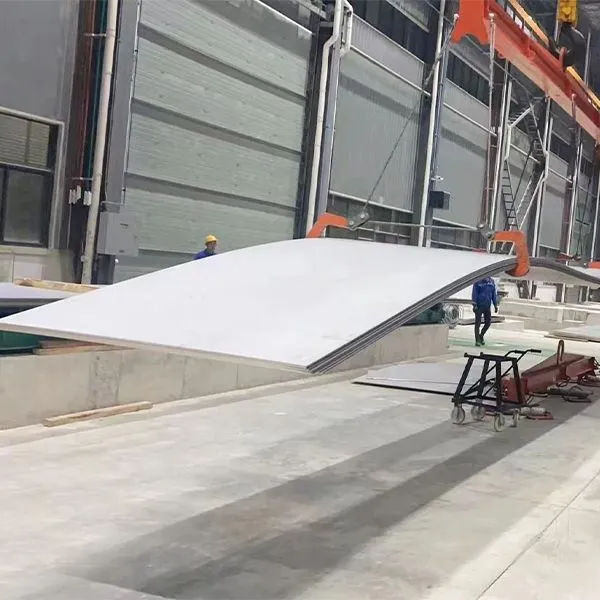

In chemical processing plants, S32760 can be used in reactors, storage tanks, and piping systems. The steel's ability to withstand the corrosive effects of various chemicals ensures long - term reliability of the equipment.
Desalination plants also benefit from using S32760. The steel's resistance to chloride - induced corrosion is essential in an environment where it's constantly exposed to saltwater.
If you're in the market for S32760 stainless steel, whether it's for a small project or a large - scale industrial application, I'd love to talk to you. We've got a wide range of S32760 products available, and we can work with you to find the right solution for your needs. Just reach out, and we can start a conversation about your requirements.
In conclusion, understanding the alloying element content of S32760 stainless steel is key to appreciating its unique properties and suitability for different applications. Whether you're an engineer, a project manager, or just someone interested in metals, I hope this blog has given you a better understanding of what makes S32760 such a great material.
References
- ASM Handbook Volume 13A: Corrosion: Fundamentals, Testing, and Protection
- Stainless Steel World Magazine articles on super duplex stainless steels