

Hey there! As a supplier of 410 stainless steel sheet, I often get asked about its fatigue resistance. So, I thought I'd write this blog to give you a breakdown of what it means, why it matters, and how 410 stainless steel sheet stacks up in this aspect.
First off, let's talk about what fatigue resistance is. In simple terms, fatigue resistance refers to a material's ability to withstand repeated loading and unloading without failing. When a material is subjected to cyclic stresses, tiny cracks can start to form on its surface. Over time, these cracks can grow and eventually lead to the material breaking apart. A material with high fatigue resistance can resist the formation and growth of these cracks for a longer period, which means it can last longer under cyclic loading conditions.
Now, let's dig into why fatigue resistance is important. In many applications, materials are exposed to cyclic stresses. For example, in automotive parts like engine components, the parts are constantly being loaded and unloaded as the engine runs. In aerospace applications, aircraft components are subjected to cyclic stresses during takeoff, flight, and landing. If the materials used in these applications don't have good fatigue resistance, they can fail prematurely, which can lead to safety issues and costly repairs.
So, how does 410 stainless steel sheet fare in terms of fatigue resistance? Well, 410 stainless steel is a martensitic stainless steel. It contains around 11.5 - 13.5% chromium, which gives it good corrosion resistance, and a small amount of carbon, which allows it to be hardened through heat treatment. This combination of properties makes it a popular choice for many applications where both corrosion resistance and strength are required.
In terms of fatigue resistance, 410 stainless steel sheet has decent performance. The heat treatment process can significantly affect its fatigue properties. When properly heat - treated, 410 stainless steel can develop a microstructure that helps it resist crack initiation and propagation. For instance, quenching and tempering can increase the hardness and strength of the steel, which in turn improves its ability to withstand cyclic stresses.
However, it's important to note that the fatigue resistance of 410 stainless steel sheet can be influenced by several factors. One of the key factors is the surface finish. A smooth surface finish can reduce the stress concentration points on the material, which helps to prevent crack initiation. On the other hand, a rough surface finish can act as a site for crack formation, reducing the fatigue life of the material.
Another factor is the environment. 410 stainless steel has good corrosion resistance, but in harsh environments with high levels of moisture, salt, or chemicals, corrosion can occur. Corrosion can weaken the material and reduce its fatigue resistance. For example, in marine applications where the steel is exposed to saltwater, corrosion can start to eat away at the surface of the 410 stainless steel sheet, making it more prone to fatigue failure.
The loading conditions also play a big role. The magnitude, frequency, and type of cyclic stress (e.g., tension - compression, bending) can all affect the fatigue resistance of 410 stainless steel sheet. Higher stress magnitudes and frequencies generally lead to shorter fatigue lives.
When comparing 410 stainless steel sheet with other stainless steels, it's important to understand its relative position. For example, 440C Stainless Steet is another martensitic stainless steel. 440C has a higher carbon content than 410, which gives it higher hardness and strength. In some cases, 440C may have better fatigue resistance, especially in applications where high - stress cyclic loading is involved. However, 440C also has lower corrosion resistance compared to 410 in some environments.

631 Stainless Steel, also known as 17 - 7PH stainless steel, is a precipitation - hardening stainless steel. It has excellent strength and good fatigue resistance, especially when properly heat - treated. It's often used in aerospace and high - performance applications where both high strength and fatigue resistance are crucial.
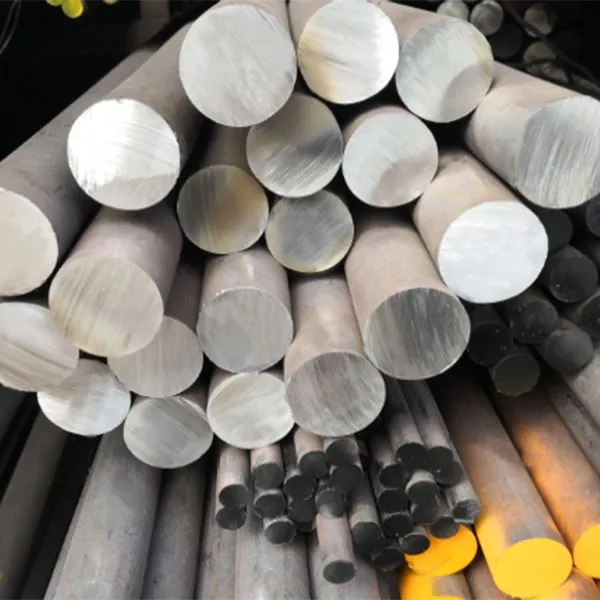
In addition to sheets, Ss 410 2mm 3mm 6mm Stainless Steel Round Bar is also available. The round bars made of 410 stainless steel have similar fatigue resistance characteristics as the sheets, but the shape and size can also affect how they perform under cyclic loading. For example, the cross - sectional area and the stress distribution within the round bar can influence crack initiation and propagation.
As a supplier of 410 stainless steel sheet, I can offer you high - quality products. We make sure that our 410 stainless steel sheets are produced with strict quality control measures. We pay close attention to the heat treatment process to ensure that the sheets have the optimal microstructure for good fatigue resistance. We also offer different surface finishes to meet your specific requirements. Whether you need a smooth finish for applications where crack initiation needs to be minimized or a rougher finish for better adhesion in certain processes, we've got you covered.
If you're in the market for 410 stainless steel sheet and are concerned about fatigue resistance for your application, don't hesitate to reach out. We can provide you with detailed information about the fatigue properties of our products and help you choose the right material for your needs. Whether it's for automotive, aerospace, or any other industry, we're here to assist you in making the best decision.
In conclusion, 410 stainless steel sheet has decent fatigue resistance, especially when properly heat - treated and used in appropriate environments. However, it's important to consider all the factors that can affect its fatigue performance. If you have any further questions or want to discuss your specific requirements, feel free to get in touch. We're always happy to help you with your 410 stainless steel sheet procurement needs.
References
- ASM Handbook Volume 13A: Corrosion: Fundamentals, Testing, and Protection
- Metals Handbook Desk Edition, Third Edition