

Alloy C276, also known as Hastelloy C276, is a nickel - molybdenum - chromium superalloy with excellent corrosion resistance in a wide range of aggressive environments. As a reliable supplier of Alloy C276, I've witnessed the significance of heat - treatment in determining the alloy's properties, especially its hardness. In this blog, I'll delve into how the hardness of Alloy C276 changes with heat - treatment.
Understanding Alloy C276
Before discussing heat - treatment, it's essential to understand the basic composition and characteristics of Alloy C276. This alloy typically contains about 57% nickel, 16% molybdenum, 15% chromium, along with small amounts of tungsten, iron, and other elements. Its unique chemical composition endows it with outstanding resistance to pitting, crevice corrosion, and stress - corrosion cracking, making it suitable for applications in chemical processing, pollution control, and offshore oil and gas industries.
The Role of Heat - Treatment
Heat - treatment is a crucial process for metals and alloys as it can significantly alter their microstructure and, consequently, their mechanical properties. For Alloy C276, heat - treatment can be used to optimize hardness, strength, ductility, and toughness according to specific application requirements.
Annealing Process and Its Effect on Hardness
Annealing is a heat - treatment process that involves heating the alloy to a specific temperature and then slowly cooling it. In the case of Alloy C276, the typical annealing temperature ranges from 1066°C to 1121°C (1950°F to 2050°F).
During annealing, the internal stresses in the alloy are relieved, and the grains in the microstructure become more uniform. The slow cooling rate allows the atoms in the alloy to rearrange themselves into a more stable configuration. As a result of annealing, the hardness of Alloy C276 generally decreases. This is because the process reduces the dislocation density in the alloy. Dislocations are line defects in the crystal lattice, and a high dislocation density contributes to increased hardness. By annealing, the dislocations can move and annihilate each other, leading to a softer and more ductile material.
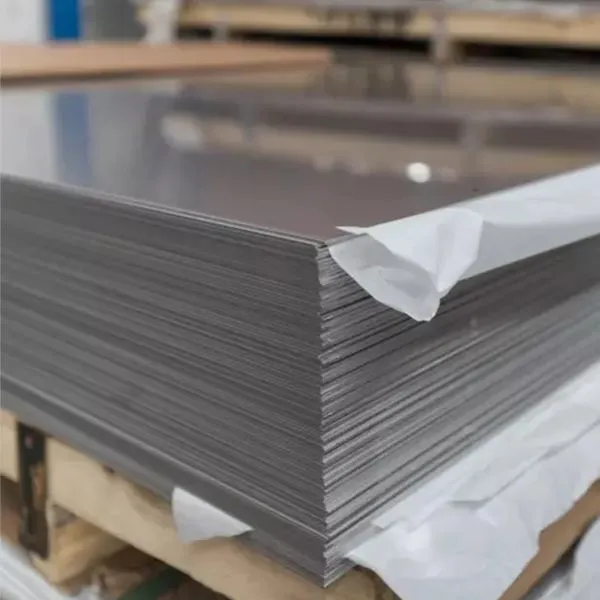

For example, if an Alloy C276 component has been subjected to cold - working, such as rolling or forging, it will have a relatively high hardness due to work - hardening. Annealing can reverse this effect and bring the hardness back to a level close to the as - cast or as - wrought state. This softer state is often desirable when the component needs to be further machined, as it reduces tool wear and improves the machinability of the alloy.
Solution Heat - Treatment and Hardness
Solution heat - treatment is another important heat - treatment process for Alloy C276. It involves heating the alloy to a high temperature (usually around 1120°C - 1177°C or 2050°F - 2150°F) to dissolve all the alloying elements in the solid solution. After that, the alloy is rapidly quenched, usually in water or oil.
The rapid quenching during solution heat - treatment "freezes" the alloying elements in a supersaturated solid solution. This process can increase the hardness of Alloy C276 to some extent. However, the hardness increase is not as significant as in some other alloys that undergo precipitation hardening. The reason is that Alloy C276 does not rely primarily on precipitation hardening for strengthening. Instead, its corrosion resistance and mechanical properties are mainly derived from its solid - solution strengthening mechanism.
Aging Treatment and Hardness
Although Alloy C276 is not a typical precipitation - hardening alloy, aging treatment can still have an impact on its hardness. Aging involves heating the alloy at a relatively low temperature (e.g., 600°C - 760°C or 1112°F - 1400°F) for an extended period.
During aging, some fine - scale precipitates may form in the alloy. These precipitates can act as obstacles to dislocation movement, thereby increasing the hardness of the alloy. However, the precipitation process in Alloy C276 is relatively slow compared to alloys like Incoloy 825 Fastener or Inconel 600 Sheet which are well - known for their precipitation - hardening capabilities.
The increase in hardness due to aging is also highly dependent on the aging time and temperature. If the aging temperature is too high or the aging time is too long, over - aging may occur. Over - aging can lead to the coarsening of the precipitates, which in turn reduces the hardness and other mechanical properties of the alloy.
Practical Applications and Hardness Requirements
The hardness of Alloy C276 after heat - treatment has a direct impact on its practical applications. In some applications where the alloy needs to resist wear and abrasion, a higher hardness is preferred. For example, in the chemical processing industry, Alloy C276 pipes or valves may be exposed to abrasive slurries. By using a suitable heat - treatment process to increase the hardness, the service life of these components can be extended.
On the other hand, in applications where the alloy needs to be formed or welded, a lower hardness is more favorable. For instance, when manufacturing Inconel 625 Sheet - like structures using Alloy C276, a softer material is easier to shape and join without cracking or other defects.
Quality Control in Heat - Treatment
As a supplier of Alloy C276, ensuring the quality of heat - treatment is of utmost importance. We use advanced heat - treatment equipment and strict process control to achieve the desired hardness and other mechanical properties. Non - destructive testing methods, such as ultrasonic testing and eddy - current testing, are used to detect any internal defects that may be caused by improper heat - treatment.
In addition, hardness testing is a routine quality control measure. We use methods like Rockwell hardness testing and Brinell hardness testing to accurately measure the hardness of Alloy C276 products. By comparing the test results with the specified hardness range, we can ensure that the products meet the customer's requirements.
Conclusion
In conclusion, the hardness of Alloy C276 is closely related to heat - treatment. Annealing generally reduces the hardness by relieving internal stresses and reducing dislocation density. Solution heat - treatment can increase the hardness slightly by forming a supersaturated solid solution. Aging treatment can also increase the hardness through the formation of fine - scale precipitates, but care must be taken to avoid over - aging.
If you are in need of high - quality Alloy C276 products with the desired hardness and other properties, we are here to provide you with the best solutions. Our expertise in heat - treatment and strict quality control ensure that you will get products that meet your specific application requirements. Feel free to contact us for more information and to start a procurement negotiation.
References
- ASM Handbook, Volume 4: Heat Treating, ASM International.
- "Corrosion Resistance of Nickel and Its Alloys" by R. Winston Revie.
- Technical literature on Alloy C276 provided by major alloy manufacturers.