

As a supplier of alloy steel, I often get asked whether alloy steel can be cold - worked. Cold working is a crucial process in the metalworking industry, and understanding its applicability to alloy steel is essential for both manufacturers and end - users. In this blog post, I'll explore the concept of cold working alloy steel, its feasibility, advantages, limitations, and some practical considerations.
What is Cold Working?
Cold working refers to the process of deforming metal at temperatures below its recrystallization temperature. This typically includes processes like rolling, drawing, bending, and pressing. When metal is cold - worked, its internal structure is altered. Dislocations, which are defects in the crystal lattice of the metal, multiply and entangle. This leads to an increase in the strength and hardness of the metal, a phenomenon known as strain hardening.
Can Alloy Steel be Cold - Worked?
The short answer is yes, alloy steel can be cold - worked. Alloy steel is a type of steel that has had additional elements such as chromium, nickel, molybdenum, and others added to it. These alloying elements are incorporated to enhance certain properties like strength, corrosion resistance, and heat resistance.
The ability of alloy steel to be cold - worked depends on several factors, including the specific alloy composition, the amount of cold work required, and the intended application. Some alloy steels are more amenable to cold working than others. For example, certain low - alloy steels with relatively simple compositions can be cold - worked with relative ease.
Advantages of Cold Working Alloy Steel
- Increased Strength and Hardness: As mentioned earlier, cold working causes strain hardening. This results in an increase in the yield strength and hardness of the alloy steel. For applications where high strength is required, such as in the manufacturing of fasteners or structural components, cold - worked alloy steel can be an excellent choice. For instance, Incoloy 825 Fastener made from cold - worked alloy steel can withstand higher loads without deforming.
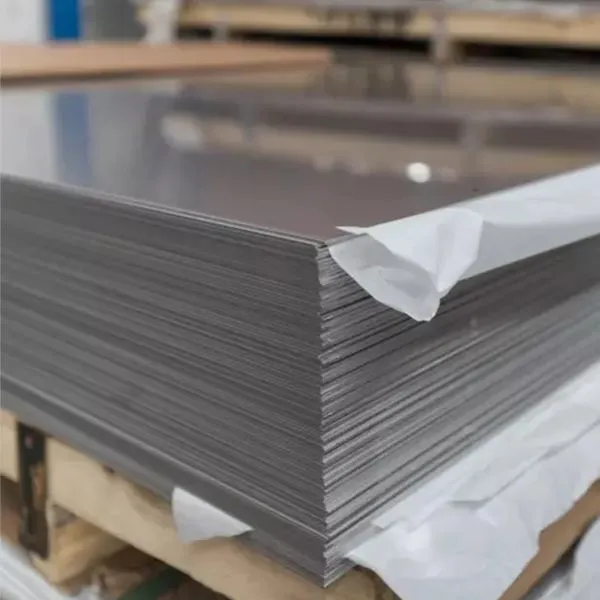
- Improved Surface Finish: Cold working processes can produce a smooth and precise surface finish. This is particularly important for applications where aesthetics or a low - friction surface is required. For example, cold - rolled Inconel 600 Sheet can have a very smooth surface, which is beneficial for applications in the food processing or chemical industries.
- Dimensional Accuracy: Cold working allows for tight control over the dimensions of the final product. This is crucial in applications where precise tolerances are necessary, such as in the aerospace or automotive industries.
Limitations of Cold Working Alloy Steel
- Reduced Ductility: One of the main drawbacks of cold working is that it reduces the ductility of the alloy steel. As the metal becomes stronger and harder, it becomes more brittle and less able to deform without cracking. This can be a problem if the final product needs to undergo further forming operations or if it will be subjected to impact loads.
- Residual Stresses: Cold working introduces residual stresses into the metal. These stresses can cause distortion over time, especially if the part is exposed to heat or other external forces. In some cases, additional heat treatment may be required to relieve these residual stresses.
- Work Hardening Limit: There is a limit to how much cold work an alloy steel can undergo. If too much cold work is applied, the metal will reach a point where it becomes too hard and brittle to be further deformed. At this stage, cracking or other forms of failure may occur.
Practical Considerations for Cold Working Alloy Steel
- Alloy Selection: When planning to cold - work alloy steel, it's important to select the right alloy for the job. Consider the required strength, ductility, and corrosion resistance. Consult with a metallurgist or an experienced engineer to determine the most suitable alloy composition.
- Cold Working Process Selection: Different cold working processes have different effects on the alloy steel. For example, rolling is suitable for producing sheets and plates, while drawing is used for making wires and tubes. Choose the process that best suits the desired shape and properties of the final product.
- Intermediate Annealing: To overcome the limitations of work hardening, intermediate annealing may be necessary. Annealing is a heat treatment process that involves heating the metal to a specific temperature and then cooling it slowly. This restores the ductility of the metal and allows for further cold working.
Case Studies
Let's take a look at a couple of real - world examples of cold - worked alloy steel applications.

Aerospace Industry: In the aerospace industry, cold - worked alloy steel is used to manufacture various components, such as landing gear parts and engine components. The high strength and dimensional accuracy provided by cold working are essential for ensuring the safety and performance of these critical parts. For example, cold - worked alloy steel bars are used to make shafts that need to withstand high loads and precise rotational forces. Inconel 600 Bar is a popular choice due to its excellent corrosion resistance and high - temperature strength.
Automotive Industry: In the automotive industry, cold - worked alloy steel is used in the production of suspension components, gears, and fasteners. The increased strength and hardness of cold - worked alloy steel help to improve the durability and performance of these parts. For instance, cold - worked alloy steel fasteners are used to secure engine components, ensuring a reliable connection even under high - vibration conditions.
Conclusion
In conclusion, alloy steel can indeed be cold - worked, but it requires careful consideration of several factors. The ability to cold - work alloy steel offers many advantages, such as increased strength, improved surface finish, and dimensional accuracy. However, it also has limitations, including reduced ductility and the introduction of residual stresses.
As a supplier of alloy steel, I am committed to providing high - quality materials and technical support to our customers. Whether you are looking for Inconel 600 Bar, Incoloy 825 Fastener, or Inconel 600 Sheet, we can help you select the right alloy and provide guidance on the cold working process. If you have any questions or are interested in purchasing our alloy steel products, please feel free to contact us for a detailed discussion and to start the procurement process.
References
- ASM Handbook Volume 6: Welding, Brazing, and Soldering. ASM International.
- Metals Handbook Desk Edition, 3rd Edition. ASM International.
- "Cold Working of Metals" by G. E. Dieter, Jr. in the Encyclopedia of Materials: Science and Technology.