

Hey there! As a supplier of S32760 stainless steel, I often get asked about the best welding materials for this super-duplex stainless steel. S32760 is a top - notch material known for its excellent corrosion resistance, high strength, and good toughness. But to make the most of its properties, choosing the right welding materials is crucial. So, let's dive into what welding materials are suitable for S32760 stainless steel.
Understanding S32760 Stainless Steel
Before we talk about welding materials, it's good to know a bit about S32760 itself. This super - duplex stainless steel has a balanced microstructure of ferrite and austenite. It contains elements like chromium, nickel, molybdenum, and nitrogen, which contribute to its great performance in harsh environments, such as offshore oil and gas platforms, chemical processing plants, and desalination plants.
Welding Challenges with S32760
Welding S32760 isn't without its challenges. During the welding process, the high heat input can disrupt the balance between ferrite and austenite phases. If not properly controlled, this can lead to a decrease in corrosion resistance and mechanical properties. Also, there's a risk of forming harmful intermetallic phases like sigma and chi phases, which can make the welded joint brittle.
Suitable Welding Materials
Filler Metals
- ER2594
ER2594 is a popular filler metal for welding S32760. It has a composition that's quite similar to S32760, with high levels of chromium, nickel, molybdenum, and nitrogen. This similarity helps in maintaining the duplex microstructure in the weld metal. The nitrogen content in ER2594 promotes the formation of austenite during solidification, which is important for achieving good corrosion resistance and toughness in the welded joint. It's suitable for both gas tungsten arc welding (GTAW) and gas metal arc welding (GMAW). - E2594
E2594 is the covered electrode version of ER2594. It's used in shielded metal arc welding (SMAW). Just like ER2594, it has a composition that's well - matched to S32760. The coating on the electrode provides shielding gas during welding, which protects the weld pool from atmospheric contamination. This is great for on - site welding where it might be a bit more challenging to use other welding processes.
Flux - Cored Wires
- E2594T1 - 4
This flux - cored wire is another option for welding S32760. It offers high deposition rates, which means you can weld faster. The flux in the wire contains elements that help in controlling the weld metal composition and protecting the weld pool. It's suitable for GMAW - FCAW (flux - cored arc welding) process and can be used in various positions, making it quite versatile.
Factors to Consider When Choosing Welding Materials
- Welding Process
The welding process you choose will influence the type of welding material. For example, if you're using GTAW, you'll need a filler metal like ER2594. If SMAW is your go - to process, then E2594 electrodes are the way to go. - Base Metal Thickness
Thicker base metals might require a higher heat input during welding. In such cases, you need to choose a welding material that can handle the heat without losing its properties. Flux - cored wires like E2594T1 - 4 can be a good choice for thicker S32760 sections as they can provide a higher deposition rate. - Service Environment
If the welded structure will be exposed to a highly corrosive environment, you need to make sure the welding material can provide the same level of corrosion resistance as the base metal. For example, in a seawater environment, the nitrogen - containing filler metals like ER2594 are a great option as nitrogen enhances the pitting and crevice corrosion resistance.
Comparing with Other Stainless Steels
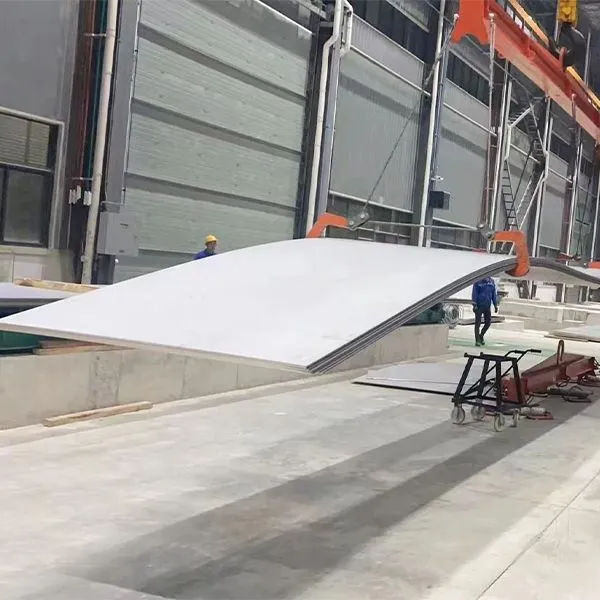
It's interesting to compare S32760 with other duplex stainless steels like 2507 Stainless Steel Sheet, 2205 Stainless Steel Plate, and 2205 Stainless Steel Sheet. While they all belong to the duplex stainless steel family, S32760 has higher alloy content, which gives it better corrosion resistance and strength. When welding these other duplex stainless steels, the welding materials might be a bit different. For 2205, ER2209 filler metal is commonly used, which has a lower alloy content compared to the filler metals used for S32760.

Welding Procedure
Once you've chosen the right welding material, following the correct welding procedure is essential. Pre - heating is usually not required for S32760, but it's important to control the inter - pass temperature. Keeping the inter - pass temperature below 150°C helps in preventing the formation of harmful intermetallic phases. Also, using a proper shielding gas is crucial. For GTAW and GMAW, a mixture of argon and nitrogen is often used to protect the weld pool and promote the formation of austenite.
Tips for Successful Welding
- Clean the Base Metal: Before welding, make sure the S32760 surface is clean. Any dirt, oil, or oxide can affect the quality of the weld.
- Use the Right Equipment: Make sure your welding equipment is in good condition and calibrated correctly.
- Practice: If you're new to welding S32760, it's a good idea to practice on some test pieces first to get a feel for the process and the welding material.
Conclusion
In conclusion, choosing the right welding materials for S32760 stainless steel is key to achieving high - quality welded joints. Filler metals like ER2594 and E2594, as well as flux - cored wires like E2594T1 - 4, are great options. By considering factors like the welding process, base metal thickness, and service environment, you can ensure that the welded structure performs well in its intended application.
If you're in the market for S32760 stainless steel or have any questions about welding it, feel free to reach out. We're here to help you make the best choices for your projects. Contact us for more information and to start a procurement discussion.
References
- ASME Boiler and Pressure Vessel Code, Section IX - Welding and Brazing Qualifications
- AWS A5.9/A5.9M:2012, Specification for Stainless Steel Filler Metals
- Duplex Stainless Steels: Properties, Processing and Applications by R.K. Ray and S.K. Albert