

Duplex stainless steel has gained significant popularity in various industries due to its unique combination of properties, such as high strength, excellent corrosion resistance, and good weldability. Among the various alloying elements used in duplex stainless steel, vanadium plays a crucial role in enhancing its performance. As a leading supplier of duplex stainless steel, I am excited to delve into the role of vanadium in this remarkable material.
Strengthening Mechanisms
One of the primary roles of vanadium in duplex stainless steel is to contribute to its strength. Vanadium forms fine carbides and nitrides within the steel matrix. These precipitates act as obstacles to the movement of dislocations, which are the primary carriers of plastic deformation in metals. When a load is applied to the steel, the dislocations encounter these precipitates and are pinned, requiring more energy to move past them. This results in an increase in the yield strength and tensile strength of the duplex stainless steel.
The precipitation of vanadium carbides and nitrides occurs during the heat treatment process. By carefully controlling the heat treatment parameters, such as temperature and time, the size, distribution, and volume fraction of these precipitates can be optimized to achieve the desired strength properties. For example, in some duplex stainless steels, a combination of solution annealing and aging treatments can be used to promote the formation of fine vanadium precipitates, leading to a significant improvement in strength without sacrificing too much ductility.
Grain Refinement
Vanadium also plays a vital role in grain refinement in duplex stainless steel. During the solidification process, vanadium can act as a heterogeneous nucleation site for the formation of new grains. This leads to a more uniform and finer grain structure in the steel. A finer grain size has several benefits for the mechanical properties of the material.
Firstly, it improves the strength of the steel according to the Hall - Petch relationship, which states that the yield strength of a polycrystalline material is inversely proportional to the square root of the grain size. Secondly, a finer grain size enhances the toughness of the steel by reducing the size of the cleavage planes, making it more difficult for cracks to propagate. Additionally, grain refinement can improve the formability and weldability of the duplex stainless steel, as it reduces the tendency for grain boundary cracking.
Corrosion Resistance
In addition to its strengthening and grain - refining effects, vanadium can also have a positive impact on the corrosion resistance of duplex stainless steel. Vanadium can form a protective oxide layer on the surface of the steel, which acts as a barrier against corrosive agents. This oxide layer is stable and adherent, preventing the penetration of corrosive species such as chloride ions, which are known to cause pitting and crevice corrosion in stainless steels.
Moreover, vanadium can interact with other alloying elements in the steel, such as chromium and molybdenum, to enhance the passive film formation. The passive film is a thin, self - healing layer that forms on the surface of stainless steel and provides excellent corrosion resistance. By promoting the formation and stability of the passive film, vanadium helps to improve the overall corrosion resistance of the duplex stainless steel in various environments, including marine and chemical processing applications.
Applications in Different Grades of Duplex Stainless Steel
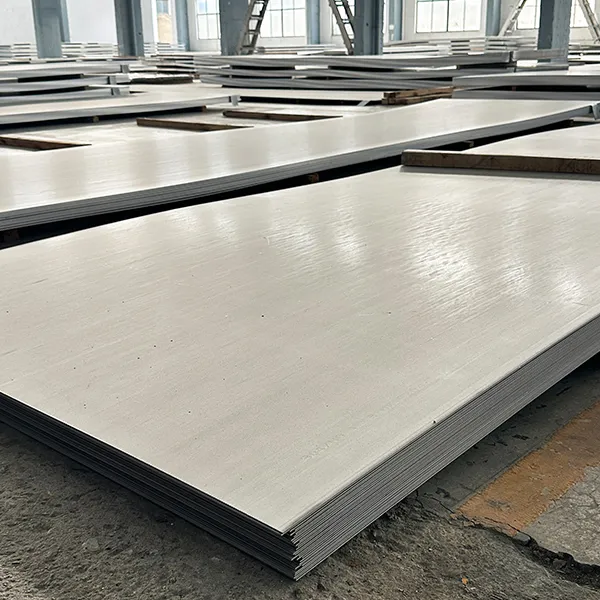
The beneficial effects of vanadium are evident in different grades of duplex stainless steel. For instance, in 2507 Stainless Steel Sheet, vanadium contributes to its high strength and excellent corrosion resistance in highly aggressive environments. This grade is commonly used in offshore oil and gas platforms, desalination plants, and chemical processing equipment, where it needs to withstand high pressures, high temperatures, and corrosive media.
904L Stainless Steel Sheet also benefits from the presence of vanadium. Although it is a low - carbon austenitic stainless steel, the addition of vanadium can improve its mechanical properties and corrosion resistance. It is often used in applications where resistance to sulfuric acid, phosphoric acid, and other corrosive acids is required, such as in the food and beverage industry and pharmaceutical manufacturing.
S32550 Stainless Steel is another grade where vanadium plays an important role. This duplex stainless steel offers a good balance of strength, toughness, and corrosion resistance. It is suitable for a wide range of applications, including pulp and paper mills, chemical storage tanks, and architectural structures. The vanadium in S32550 helps to ensure its long - term performance in these demanding applications.

Our Offerings as a Supplier
As a trusted supplier of duplex stainless steel, we understand the importance of vanadium and other alloying elements in achieving the desired properties of the material. We offer a wide range of duplex stainless steel products, including sheets, plates, bars, and pipes, in various grades and specifications. Our products are manufactured using state - of - the - art technology and strict quality control measures to ensure their high quality and performance.
We have a team of experienced metallurgists and engineers who can provide technical support and advice to our customers. Whether you need help in selecting the right grade of duplex stainless steel for your specific application or have questions about the heat treatment and processing of the material, we are here to assist you.
Contact Us for Procurement
If you are interested in purchasing duplex stainless steel products or want to learn more about the role of vanadium and other alloying elements in our materials, we encourage you to contact us. Our sales team is ready to discuss your requirements and provide you with a competitive quote. We are committed to providing our customers with the best products and services, and we look forward to establishing a long - term partnership with you.
References
- ASM Handbook Committee, ASM Handbook Volume 3: Alloy Phase Diagrams, ASM International, 1992.
- Luppo, D., & Ceschini, L. "Effect of vanadium on the mechanical properties of duplex stainless steels." Journal of Materials Science, 2010, 45(12), 3267 - 3275.
- Uhlig, H. H., & Revie, R. W., Corrosion and Corrosion Control: An Introduction to Corrosion Science and Engineering, Wiley - Interscience, 1985.