

As a reliable supplier of 630 stainless steel tubes, I often receive inquiries about the inner diameter range of these tubes. In this blog post, I'll delve into the details of the inner diameter range of 630 stainless steel tubes, explain its significance, and touch on other related aspects that are crucial for those interested in these products.
Understanding 630 Stainless Steel Tube
Before we jump into the inner diameter range, let's briefly understand what 630 stainless steel tube is. 630 stainless steel, also known as 17 - 4 PH, is a precipitation - hardening martensitic stainless steel. It combines high strength, good corrosion resistance, and excellent mechanical properties, making it suitable for a wide range of applications in industries such as aerospace, automotive, and marine.
Inner Diameter Range of 630 Stainless Steel Tube
The inner diameter range of 630 stainless steel tubes can vary significantly based on manufacturing capabilities and customer requirements. Generally, the inner diameter can range from a few millimeters to several hundred millimeters.
For smaller - scale applications, such as in precision instruments or some medical devices, the inner diameter of 630 stainless steel tubes can be as small as 1 - 5 mm. These small - diameter tubes are often used where space is limited and high - precision fluid or gas transfer is required.
On the other hand, for industrial applications like large - scale piping systems or structural components, the inner diameter can reach up to 300 - 400 mm or even larger in some special cases. However, it's important to note that as the inner diameter increases, the manufacturing process becomes more complex, and the cost may also rise accordingly.
In the standard market, common inner diameter sizes of 630 stainless steel tubes include 10 mm, 20 mm, 50 mm, 100 mm, etc. These sizes are widely available and can meet the needs of most general applications.
Factors Affecting the Inner Diameter Range
Several factors influence the achievable inner diameter range of 630 stainless steel tubes:
Manufacturing Process
The manufacturing process plays a crucial role. For example, seamless tube manufacturing techniques can usually produce tubes with a more precise and wider range of inner diameters compared to welded tubes. Seamless tubes are made by piercing a solid billet, which allows for better control over the inner and outer dimensions. Welded tubes, on the other hand, are formed by welding a flat strip into a tubular shape, and the welding process may limit the minimum and maximum inner diameters that can be achieved.
Material Properties
The properties of 630 stainless steel itself also have an impact. The material's ductility and strength determine how much it can be deformed during the tube - making process. If the inner diameter is too small, the tube may be prone to cracking or other defects during manufacturing. Similarly, for very large - diameter tubes, the material needs to have sufficient strength to maintain its shape and integrity.
Customer Requirements
Ultimately, customer requirements drive the production of tubes with specific inner diameters. Different industries and applications have different needs. For instance, the aerospace industry may require tubes with very precise and small inner diameters for fuel or hydraulic systems, while the construction industry may need larger - diameter tubes for structural support.
Applications Based on Inner Diameter
The inner diameter of 630 stainless steel tubes directly affects their applications:
Small Inner Diameter Tubes
As mentioned earlier, small - inner - diameter tubes (1 - 5 mm) are commonly used in medical devices such as catheters and endoscopes. Their small size allows for minimally invasive procedures. They are also used in micro - fluidic systems, where precise control of small volumes of fluids is essential.
Medium Inner Diameter Tubes
Tubes with an inner diameter in the range of 10 - 100 mm are widely used in general industrial applications. They can be used for transporting fluids, such as water, oil, or gas, in various manufacturing plants. In the automotive industry, these tubes may be used for exhaust systems or coolant lines.
Large Inner Diameter Tubes
Large - inner - diameter tubes (over 100 mm) are often used in structural applications. For example, in the construction of bridges or high - rise buildings, they can be used as columns or support structures. They are also used in large - scale piping systems for power plants or chemical factories.
Related Products
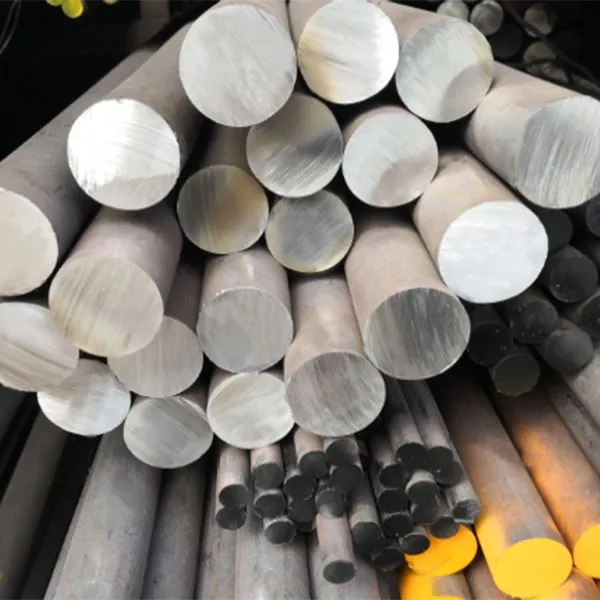
In addition to 630 stainless steel tubes, we also offer other stainless steel products. For example, we have Ss 410 2mm 3mm 6mm Stainless Steel Round Bar, which is a martensitic stainless steel with good corrosion resistance and high strength. It is suitable for applications such as shafts, bolts, and nuts. Another product is 440C Stainless Steel Sheet, which is known for its high hardness and excellent wear resistance, making it ideal for cutting tools and bearings.
Why Choose Our 630 Stainless Steel Tubes
As a professional supplier of 630 Stainless Steel Tube, we have several advantages. Firstly, we have advanced manufacturing equipment and technology, which enables us to produce tubes with a wide range of inner diameters and high precision. Secondly, we have a strict quality control system, ensuring that every tube meets the highest quality standards. We also offer customized services, so we can produce tubes according to your specific inner diameter and other requirements.
Contact Us for Purchase and Negotiation
If you are interested in our 630 stainless steel tubes or other stainless steel products, we welcome you to contact us for purchase and negotiation. Whether you need a small quantity for a prototype project or a large - scale order for an industrial application, we can provide you with the right products at competitive prices. Our team of experts is ready to assist you in choosing the most suitable inner diameter and other specifications for your needs.

References
- ASM Handbook Volume 13A: Corrosion: Fundamentals, Testing, and Protection
- Stainless Steel: A Guide to Properties, Processing, and Applications