

Yo, folks! As a supplier of 420 stainless steel pipes, I often get asked about the density of these bad boys. So, I thought I'd take a moment to break it down for y'all and give you the lowdown on what makes 420 stainless steel pipes tick.
First off, let's talk about what 420 stainless steel is. It's a martensitic stainless steel that's known for its high hardness, strength, and corrosion resistance. It contains around 12% chromium, which gives it that shiny, rust - resistant finish, and a bit of carbon to boost its hardness. This makes it a popular choice for a variety of applications, from cutlery and surgical instruments to industrial machinery and automotive parts.
Now, onto the main question: what's the density of 420 stainless steel pipe? The density of 420 stainless steel is approximately 7.75 g/cm³. But what does that actually mean, and why is it important?

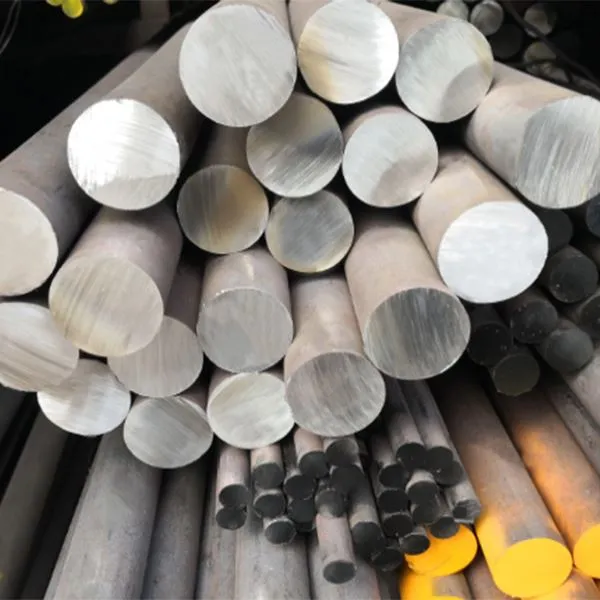
Density is basically how much mass is packed into a given volume. In the case of our 420 stainless steel pipes, a density of 7.75 g/cm³ tells us that for every cubic centimeter of the pipe material, there's about 7.75 grams of mass. This is useful information for a few reasons.
For one, it helps in calculating the weight of the pipes. If you know the dimensions of a 420 stainless steel pipe (its length, diameter, and wall thickness), you can use the density value to figure out how much it weighs. This is super important for shipping and handling purposes. You don't want to hire a truck that's not big enough to carry your pipes because you underestimated their weight!
Let's say you have a 420 stainless steel pipe with an outer diameter of 2 inches (about 5.08 cm), a wall thickness of 0.1 inches (about 0.254 cm), and a length of 10 feet (about 304.8 cm). First, you need to calculate the volume of the pipe. The formula for the volume of a hollow cylinder (which is what a pipe is) is (V=\pi h(R^{2}-r^{2})), where (h) is the height (or length) of the cylinder, (R) is the outer radius, and (r) is the inner radius.
The outer radius (R = \frac{5.08}{2}=2.54) cm, and the inner radius (r=(2.54 - 0.254)=2.286) cm. The volume (V=\pi\times304.8\times((2.54)^{2}-(2.286)^{2})). After calculating, we find the volume. Then, we multiply the volume by the density of 7.75 g/cm³ to get the weight of the pipe.
Another reason density matters is in terms of material properties. Different densities can affect how the material behaves under stress. A higher - density material might be able to withstand more pressure or have better mechanical properties for certain applications. In the case of 420 stainless steel, its density is related to its internal atomic structure and the way the alloying elements are arranged.
Now, if you're in the market for other types of stainless - steel products, we also offer some great alternatives. Check out our Ss 410 2mm 3mm 6mm Stainless Steel Round Bar. These round bars are made from 410 stainless steel, another martensitic stainless steel with similar properties to 420. They're great for applications where you need a strong, corrosion - resistant bar.
We also have 630 Stainless Steel Tube. 630 stainless steel is a precipitation - hardening stainless steel, which means it can be heat - treated to achieve different levels of hardness and strength. These tubes are perfect for applications where high strength and good corrosion resistance are required.
And for those looking for something a bit different, our 631 Stainless Steel is a great option. 631 is a semi - austenitic precipitation - hardening stainless steel. It has excellent formability in the annealed condition and can be hardened to high strength levels.
So, whether you're in the market for 420 stainless steel pipes or one of our other great stainless - steel products, we've got you covered. If you're interested in purchasing, we'd be more than happy to have a chat with you. Just reach out to us to discuss your requirements and get a quote. We can help you figure out the right product for your needs, whether it's based on density, strength, or any other property.
In conclusion, the density of 420 stainless steel pipes is an important factor to consider when working with these materials. It helps with weight calculations, understanding material behavior, and making informed decisions about your projects. And if you need any 420 stainless steel pipes or other related products, don't hesitate to get in touch.
References
- ASM Handbook Volume 1: Properties and Selection: Irons, Steels, and High - Performance Alloys
- Stainless Steel Handbook by The Nickel Institute