

As a trusted supplier of 410 stainless steel sheets, I am excited to delve into the fascinating world of hot - working processes for this remarkable material. 410 stainless steel is a martensitic stainless steel known for its excellent corrosion resistance, high strength, and good ductility, making it a popular choice in various industries such as automotive, aerospace, and manufacturing.
Hot - Rolling Process
One of the most common hot - working processes for 410 stainless steel sheets is hot - rolling. Hot - rolling involves passing the steel through a pair of rolls at a temperature above its recrystallization temperature, typically between 900°C and 1150°C. This process offers several advantages.
Firstly, hot - rolling can significantly reduce the thickness of the steel sheet while increasing its length and width. This allows for the production of large - sized sheets with precise dimensions. The high temperature during hot - rolling also helps to break down the coarse grain structure of the as - cast steel, resulting in a more refined and uniform microstructure. This refinement enhances the mechanical properties of the steel, such as its strength and toughness.
During hot - rolling, the steel is subjected to a series of rolling passes, each reducing the thickness by a certain amount. The number of passes and the reduction per pass depend on the initial and final thickness requirements of the sheet. After each pass, the steel may be reheated to maintain the proper rolling temperature.
Forging Process
Forging is another important hot - working process for 410 stainless steel sheets. Forging involves applying compressive forces to the steel using a hammer or a press to shape it into the desired form. Similar to hot - rolling, forging is carried out at elevated temperatures to improve the workability of the steel.
One of the key benefits of forging is that it can produce parts with superior mechanical properties compared to other manufacturing methods. The compressive forces applied during forging align the grain structure of the steel in the direction of the applied force, resulting in enhanced strength and fatigue resistance. Forging can also eliminate internal defects such as porosity and inclusions, further improving the quality of the material.
In the case of 410 stainless steel sheets, forging can be used to create complex shapes and profiles. For example, it can be used to produce flanges, hubs, and other components with specific geometries. The forging process can be divided into open - die forging and closed - die forging. Open - die forging is suitable for producing simple shapes, while closed - die forging is used for more complex parts with precise dimensions.
Extrusion Process
Extrusion is a hot - working process in which the 410 stainless steel is forced through a die to create a continuous profile with a constant cross - section. This process is particularly useful for producing long, slender shapes such as rods, tubes, and channels.
During extrusion, the steel billet is heated to a suitable temperature and placed in a container. A ram then applies pressure to the billet, forcing it through the die. The die determines the shape of the extruded product. The extrusion process offers several advantages for 410 stainless steel sheets. It can produce parts with high dimensional accuracy and smooth surface finishes. Additionally, the continuous nature of the extrusion process allows for high - volume production.
Extruded 410 stainless steel sheets can be used in a wide range of applications. For instance, extruded tubes are commonly used in the construction of heat exchangers and plumbing systems. The high strength and corrosion resistance of 410 stainless steel make it an ideal material for these applications.
Hot - Bending Process
Hot - bending is a process used to shape 410 stainless steel sheets into curved or bent forms. This process is carried out at elevated temperatures to reduce the resistance of the steel to deformation. Hot - bending is often used in the manufacturing of pipes, tubes, and structural components.
To perform hot - bending, the steel sheet is first heated to a specific temperature, usually between 800°C and 1000°C. The heated sheet is then placed in a bending machine, where it is bent to the desired angle or radius. The bending process can be achieved using various methods, such as roll - bending, press - bending, and induction - bending.
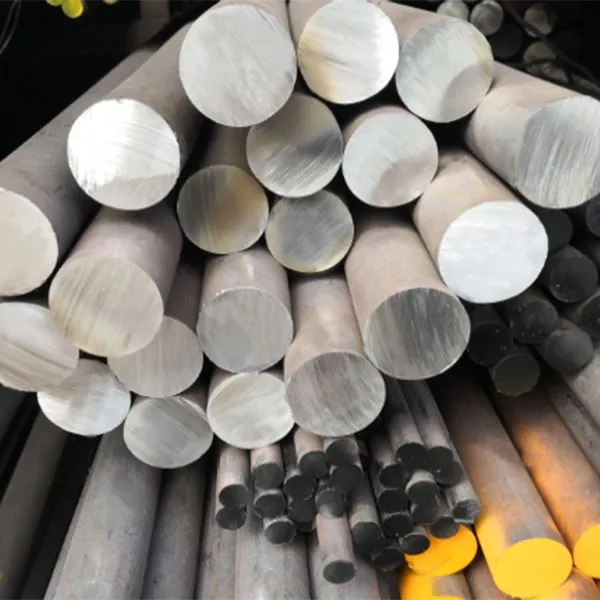

Roll - bending involves passing the steel sheet through a series of rolls to gradually bend it. Press - bending uses a hydraulic press to apply a bending force to the sheet. Induction - bending, on the other hand, uses an induction heating coil to heat the specific area of the sheet that needs to be bent, allowing for more precise control of the bending process.
Considerations in Hot - Working 410 Stainless Steel Sheets
When performing hot - working processes on 410 stainless steel sheets, several factors need to be considered. Firstly, the heating rate and soaking time are crucial. A slow heating rate is recommended to avoid thermal shock and ensure uniform heating throughout the sheet. The soaking time at the working temperature should be sufficient to allow for proper recrystallization and grain refinement.
Secondly, the cooling rate after hot - working is also important. A rapid cooling rate can lead to the formation of martensite, which may increase the hardness and brittleness of the steel. Therefore, a controlled cooling rate is often required to achieve the desired microstructure and mechanical properties.
In addition, the surface quality of the steel sheet needs to be maintained during hot - working. Oxidation can occur at high temperatures, which may affect the appearance and performance of the final product. To prevent oxidation, protective coatings or atmospheres can be used during the hot - working process.
Applications of Hot - Worked 410 Stainless Steel Sheets
Hot - worked 410 stainless steel sheets find numerous applications in different industries. In the automotive industry, they are used for exhaust systems, engine components, and structural parts due to their high strength and corrosion resistance. In the aerospace industry, 410 stainless steel sheets are used for aircraft landing gear, engine mounts, and other critical components.
In the manufacturing industry, hot - worked 410 stainless steel sheets are used to produce machinery parts, tools, and equipment. Their excellent mechanical properties make them suitable for applications that require high wear resistance and durability.
Conclusion
In conclusion, hot - working processes play a vital role in the production of 410 stainless steel sheets. Hot - rolling, forging, extrusion, and hot - bending are some of the key processes that can be used to shape and improve the properties of this material. By understanding the principles and considerations of these hot - working processes, we can produce high - quality 410 stainless steel sheets that meet the diverse needs of our customers.
If you are interested in purchasing high - quality 410 stainless steel sheets or have any questions about our products, please feel free to contact us for a detailed discussion. We are committed to providing you with the best solutions and excellent customer service.
References
- ASM Handbook Committee. (2004). ASM Handbook Volume 14A: Metalworking: Bulk Forming. ASM International.
- Davis, J. R. (2000). Stainless Steels: ASM Specialty Handbook. ASM International.
- Totten, G. E., & MacKenzie, D. S. (2003). Handbook of Steel Heat Treatment: Processes and Procedures. CRC Press.