

In the world of stainless steel, S32760 stainless steel stands out as a remarkable material with a wide range of applications, from chemical processing plants to offshore oil and gas platforms. One question that often arises among engineers, fabricators, and potential buyers is whether S32760 stainless steel can be cold - worked. As a S32760 stainless steel supplier, I am here to delve into this topic in detail and provide you with comprehensive insights.
Understanding S32760 Stainless Steel
S32760, also known as Super Duplex Stainless Steel, is characterized by its unique microstructure, which consists of a balanced mixture of ferrite and austenite phases. This dual - phase structure imparts excellent mechanical properties, including high strength, good ductility, and outstanding corrosion resistance. The chemical composition of S32760 typically includes elements such as chromium, nickel, molybdenum, and nitrogen, which contribute to its superior performance in harsh environments.
Cold - Working Basics
Cold - working is a metalworking process in which metal is deformed at room temperature. Common cold - working operations include rolling, drawing, bending, and pressing. This process can significantly change the mechanical properties of the metal, such as increasing its yield strength and hardness while reducing its ductility. Cold - working also affects the microstructure of the metal, leading to grain refinement and the formation of dislocations.
Can S32760 Stainless Steel be Cold - Worked?
The answer is yes, S32760 stainless steel can be cold - worked, but there are several factors to consider.
1. Mechanical Properties Changes
When S32760 stainless steel is cold - worked, its yield strength and ultimate tensile strength increase significantly. For example, in a study conducted on S32760 samples, cold - rolling the steel by a certain percentage led to an increase in the yield strength from around 550 MPa to over 700 MPa. However, this gain in strength comes at the cost of reduced ductility. The elongation at break of the cold - worked S32760 may decrease, making the material more prone to cracking during further forming operations if not properly managed.
2. Microstructural Changes
The cold - working process causes deformation in the ferrite and austenite phases of S32760. The dislocations are introduced in both phases, and the grains become elongated along the direction of deformation. This microstructural change can affect the corrosion resistance of the material. In some cases, localized corrosion may occur at the sites where the microstructure has been severely disrupted. However, if the cold - working is carried out within reasonable limits and followed by appropriate heat treatment, the corrosion resistance can be maintained at an acceptable level.
3. Workability
The workability of S32760 stainless steel during cold - working depends on several factors, including the initial material condition, the degree of cold - work, and the type of cold - working operation. For instance, bending S32760 requires careful consideration of the bend radius. A too - small bend radius can cause cracking at the outer surface of the bend due to the high tensile stresses involved. Similarly, in drawing operations, proper lubrication is essential to reduce friction and prevent surface damage.
Advantages of Cold - Working S32760 Stainless Steel
1. Improved Strength
As mentioned earlier, cold - working can significantly enhance the strength of S32760 stainless steel. This makes it suitable for applications where high strength is required, such as structural components in offshore platforms or high - pressure pipelines. For example, cold - worked S32760 can be used to manufacture thin - walled pipes with high burst pressure ratings, reducing the overall weight of the structure while maintaining its integrity.
2. Dimensional Accuracy
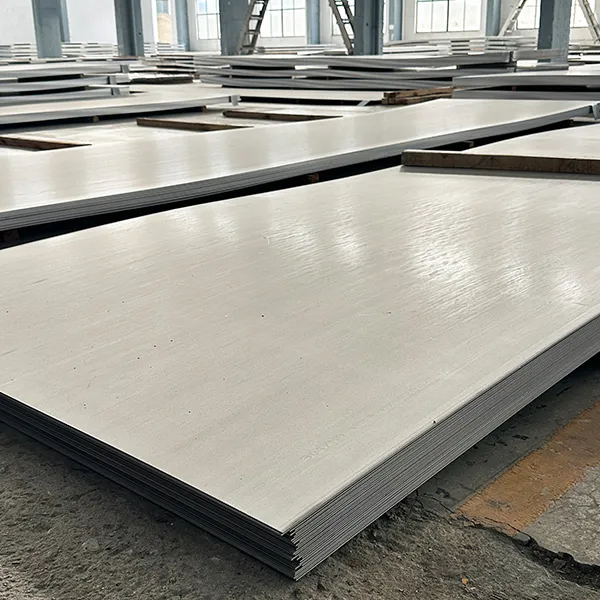
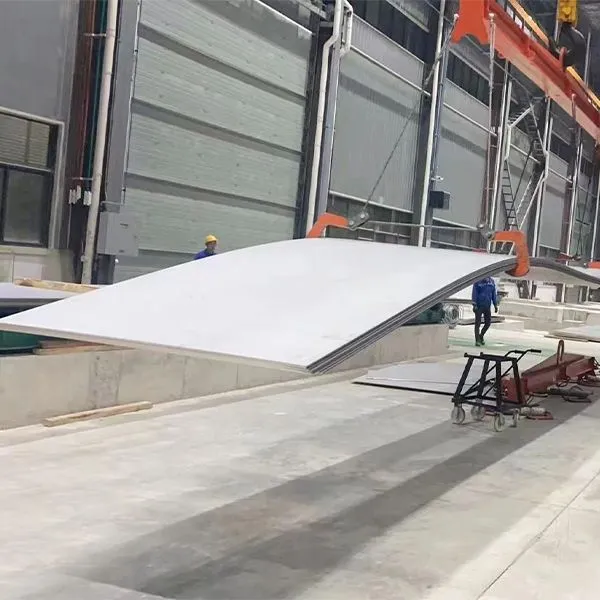
Cold - working processes can achieve high levels of dimensional accuracy. Rolled S32760 sheets or plates can be produced with tight tolerances, which is crucial for applications where precision is required. This is particularly beneficial in industries such as aerospace and automotive manufacturing, where components need to fit together precisely.
Challenges and Mitigation Strategies
1. Cracking
One of the main challenges in cold - working S32760 is the risk of cracking. This can be mitigated by controlling the degree of cold - work. Generally, it is recommended to limit the cold - work reduction to a certain percentage, depending on the specific application and the starting material properties. In addition, pre - heating the material slightly before cold - working can reduce the likelihood of cracking.
2. Corrosion Resistance Degradation
As mentioned, cold - working can affect the corrosion resistance of S32760. To address this issue, a post - cold - work heat treatment, such as solution annealing, can be carried out. Solution annealing at the appropriate temperature can restore the microstructure and corrosion resistance of the material.
Comparison with Other Stainless Steels
When considering cold - working, it is also interesting to compare S32760 with other stainless steels. For example, 2205 Stainless Steel Sheet and 2205 Stainless Steel Plate are also duplex stainless steels, but they have a different chemical composition and microstructure compared to S32760. While 2205 stainless steel can also be cold - worked, it may not achieve the same level of strength and corrosion resistance as S32760 after cold - working. On the other hand, 904L Stainless Steel Sheet is an austenitic stainless steel. It has good formability, but its strength increase through cold - working may not be as significant as that of S32760.
Applications of Cold - Worked S32760 Stainless Steel
The cold - worked S32760 stainless steel has found a wide range of applications. In the oil and gas industry, it is used for drill strings, risers, and subsea components. The high strength and corrosion resistance make it suitable for withstanding the harsh conditions in offshore environments. In the chemical processing industry, cold - worked S32760 can be used to manufacture reactors, heat exchangers, and pipes for transporting corrosive chemicals.
Conclusion
In conclusion, S32760 stainless steel can be cold - worked, and this process offers several advantages such as improved strength and dimensional accuracy. However, it also presents challenges such as cracking and potential corrosion resistance degradation. By carefully controlling the cold - working process and implementing appropriate mitigation strategies, these challenges can be overcome.
If you are in need of S32760 stainless steel for your projects and want to discuss cold - working requirements, or if you have any other questions about our products, please feel free to contact us for a detailed procurement discussion. We look forward to working with you to meet your stainless steel needs.
References
- ASM Handbook Volume 1: Properties and Selection: Irons, Steels, and High - Performance Alloys.
- Stainless Steel World Magazine - Various articles on duplex and super duplex stainless steels.
- Technical reports from stainless steel manufacturers on the cold - working properties of S32760.