


Company Profile
Wuxi xinfutian metal products co., ltd. Was established in the 20th century and now is a great manufacturing enterprise that integrates research and development, production, and sales departments. We has several large warehousing bases. We mainly produce stainless steel pipes, plates, coils, rods, pipe fittings, high nickel alloy steel products, high-temperature resistant products, carbon steel, galvanizing products, and also supply oem&odm services. All our products are supplied in accordance with din/en, astm/asme, din, jis standards, and our products are widely used in fields such as petrochemical, oil and gas, marine engineering, shipbuilding, boiler heat exchangers, aerospace, environmental protection equipment, mechanical processing, automobiles, hydropower, nuclear power, refrigeration, new energy equipment, etc. At present, our stocked stainless steel products is about 20000 tons. Our company has been certified by some internationally renowned certification bodies, and get certifications as iso9001, ts16949, bvsgs, etc. Our products are widely used in various fields and have supplied service more than ten years for customers from various regions as africa, europe, and america, etc. Welcome all users, manufacturers, or traders to cooperate with us.
Why Choose Us
Our history
Wuxi xinfutian metal products co., ltd. Was established in the 20th century and now is a great manufacturing enterprise that integrates research and development, production, and sales departments.
Product application
Aerospace and aviation,medical and healthcare,automotive manufacturing,construction and architecture,petrochemical industry,energy sector,food processing and catering,marine applications,water treatment and desalination.
Our certifications
Our company has been certified by some internationally renowned certification bodies, and get certifications as iso9001, ts16949, bvsgs, etc.
Our service
We will answer your questions online 24 hours a day with fast response time to help you choose products.If there is a problem with the product, we will take timely measures to solve it.
Related Product

201 stainless steel plate is a type of austenitic stainless steel renowned for its excellent formability, corrosion resistance, and affordability. Here's a breakdown of its key characteristics, microstructure type, processing process, corresponding grades, and common Q&A.

304 stainless steel tube is a widely used material known for its excellent corrosion resistance, versatility, and durability. Here's an overview of its key characteristics, microstructure type, processing process, corresponding grades, and common Q&A.

304L stainless steel sheet is a low-carbon variation of 304 stainless steel, known for its excellent corrosion resistance, weldability, and formability. Here's an overview of its key characteristics, microstructure type, processing process, corresponding grades, and common Q&A.

309S stainless steel is a high-temperature resistant austenitic stainless steel known for its excellent corrosion resistance and strength at elevated temperatures. Here's an overview of its key characteristics, microstructure type, processing process, corresponding grades, and common Q&A.

310S stainless steel sheet is a high-temperature resistant austenitic stainless steel renowned for its exceptional corrosion resistance and oxidation resistance at elevated temperatures. Here's a concise overview of its key characteristics, microstructure type, processing process, corresponding grades, and common Q&A.

316L stainless steel tube is a low carbon version of the popular 316 stainless steel grade. It is a high-quality, corrosion-resistant alloy that is widely used in various industries due to its excellent mechanical properties and chemical composition. 316L stainless steel tube is commonly used in applications where superior corrosion resistance and weldability are required, such as in the chemical, marine, food processing, and pharmaceutical industries.

321 stainless steel is a stabilized austenitic stainless steel alloy containing titanium. It offers excellent corrosion resistance, especially in high-temperature environments. The addition of titanium stabilizes the material against chromium carbide precipitation during welding, which helps maintain its corrosion resistance and prevents intergranular corrosion.
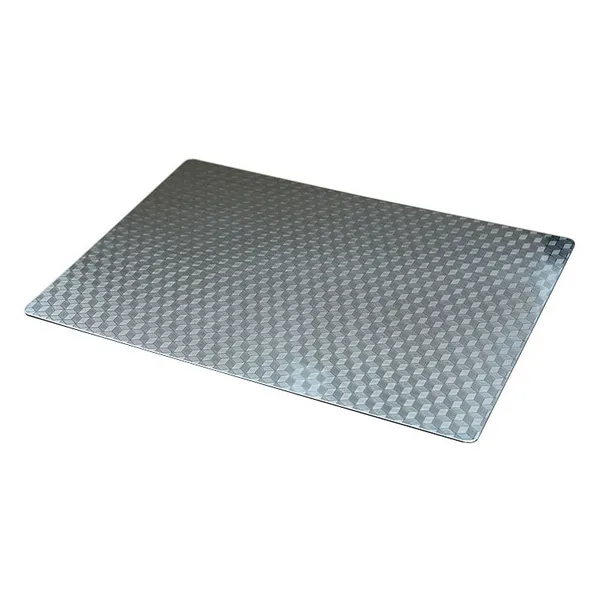
Embossed Stainless Steel Sheet
The embossed stainless steel sheet is a highly versatile product with an aesthetic appeal that sets it apart in the field of stainless steel materials. Its raised, often intricate textures not only enhance its visual effect but also increase its robustness and slip resistance.
What is 201 Stainless Steel Sheet?
Type 201 stainless steel is an austenitic chromium-nickel-manganese stainless steel which was developed to conserve nickel. Type 201 is a lower cost alternative to conventional cr-ni stainless steels such as 301 and 304. Nickel is replaced by additions of manganese and nitrogen. It is non-hardenable by thermal treatment, but may be cold worked to high tensile strengths. Type 201 is essentially nonmagnetic in the annealed condition and becomes magnetic when cold worked. Type 201 can be substituted for type 301 in many applications.
Advantages of 201 Stainless Steel Sheet
Excellent corrosion resistance
201 stainless steel plate has excellent corrosion resistance. It contains a high concentration of chromium, which can form a dense chromium oxide film to effectively prevent the erosion of oxygen, water and other corrosive media. This allows the 201 stainless steel plate to maintain good surface condition and extend its service life in harsh environments such as moisture, acidity, and alkalinity.
Good high temperature resistance
201 stainless steel plate has good high temperature resistance. Its chromium element can react with oxygen to form a stable chromium oxide film, which can effectively resist high-temperature oxidation and corrosion. Therefore, 201 stainless steel plates can still maintain stable performance in high temperature environments and are not easy to deform, fade or lose strength.
Good wear resistance
201 stainless steel plate also has good wear resistance. Its surface hardness makes it resistant to friction and wear. This makes 201 stainless steel plates widely used in the manufacturing industry to make wear-resistant parts, such as bearings, gears, etc. Its wear resistance can greatly extend the service life of equipment, reduce the frequency of maintenance and replacement, and reduce production costs.
Good processing properties
201 stainless steel plate also has good processing properties. It can be formed by cold working, hot working, etc., to adapt to various complex processing requirements. This makes 201 stainless steel plates widely used in construction, manufacturing and other fields, such as making pipes, containers, furniture, etc.
201 stainless steel has a unique set of properties that make it an excellent choice for various applications. This type of steel is a low-cost alternative to other austenitic stainless steels, such as 304 and 316.
One of the most notable properties of 201 stainless steel is its high resistance to corrosion. It contains manganese, which helps protect against rust and other forms of oxidation. Additionally, it has lower nickel content than some other stainless steels, making it more affordable while still providing good corrosion resistance.
Another property that sets this material apart is its strength and toughness. It can withstand extreme temperatures without losing its structural integrity or becoming brittle. This makes it ideal for use in diverse environments where durability is critical.
Despite being relatively easy to work with using standard machining techniques, 201 stainless steel also exhibits excellent weldability characteristics. It responds well to welding, brazing, and soldering processes without experiencing cracking or distortion commonly found in many metals.
These outstanding properties make 201 stainless steel suitable for numerous industrial applications ranging from automotive parts manufacturing to construction projects requiring long-lasting materials with superior quality at affordable cost alternatives.
How to Distinguish Stainless Steel 201 and 304
Manual touch and surface finish
In the case of stainless steel water tanks utilizing 304 and 201 stainless steel, the surface is typically matte. By visually inspecting and hand touching, we can differentiate between the two.
304 stainless steel exhibits a good level of luster and brightness and has a smooth texture when touched. On the other hand, 201 stainless steel feels rough and lacks a shiny appearance.
Additionally, a simple test involves wetting the hand with water and touching both types of stainless steel sheets. After touching, the water stain or fingerprint on the surface of 304 sheets is relatively easy to remove, while it's harder to remove water stains or fingerprints from 201 stainless steel sheets.
Grinding spark status
When iron and steel are subjected to high friction and temperature, the oxidation of various elemental particles produces sparks with distinct characteristics. Different types of steel will result in variations in the quantity, shape, bifurcation, and color of these sparks. This method is useful for determining the chemical composition and approximate content of the materials.
To apply this method, gently polish both 201 and 304 stainless steel using a grinding machine with a grinding wheel. When grinding 201 stainless steel, sparks tend to be longer, thicker, and more abundant, with a trailing pattern. Conversely, when grinding 304 stainless steel, sparks are usually shorter, thinner, and less abundant, also with a trailing pattern. Consistency in the grinding process should be ensured to facilitate accurate comparison and distinction.
Pickling agent
Apply a stainless steel pickling paste to both types of stainless steel sheets separately. After allowing it to sit for 2 minutes, observe the color change on the surface of the stainless steel. The 201 stainless steel should exhibit blackening, while the 304 stainless steel should either whiten or show no discoloration.
Spectrometer detection
Spectrometer detection offers an alternative approach, known for its scientific, straightforward, and widespread use, especially for companies making large-scale material purchases.
This method rapidly measures the elemental composition of the stainless steel through a spectrometer, enabling the identification of whether the material is 304 or 201. The reliability and credibility of this method are comparable to the chemical analysis conducted by third-party national testing centers.
Presence of magnetism
It's feasible to employ the magnetic adhesion method to identify these two materials. 201 stainless steel is generally magnetic, whereas 304 stainless steel is typically non-magnetic.
However, it is essential to note that certain variants of 304 stainless steel can exhibit magnetic properties due to variations in production processes. Therefore, relying solely on the presence or absence of magnetism is not considered a reliable method for distinguishing between 201 and 304 stainless steels.
What is the Difference Between Stainless Steel Plate 201 and Normal Steel
Working temperature
Stainless steel 201 allows the use of all common welding techniques and can work at temperatures of 1,149-1,232 ° c (2100-2250 ° f).In addition, the 430 stainless steel can withstand very good oxygen – up to 870 ° c (1598 ° f) for continuous use, and up to 815 ° c (1499 ° f) for continuous use. However, this type of stainless steel will become brittle when used at room temperature, especially when heated for a long time at temperatures between 400 – 600 ° c (752-1112 ° f).
Due to the same properties, stainless steel 304 also provides good oxidation resistance, withstanding continuous working temperatures up to 925 ° c, for high durability, so often used in construction – where structural requirements & high temperature range> 500 ° c & up to 800 ° c.
Corrosion resistance
As compared to the chemical composition of the above stainless steel, it can be seen that the chrome content of stainless steel 201 is 304 less than 2% range, so the ability to create protective layer of stainless steel will be limited. In one experiment of this nature, people sprayed many hours on both types of stainless steel mentioned above, the surface pitting resistance of stainless steel 201 (only contains about 4% of nickel) is still 304 stainless steel men. This is why people do not choose this type of stainless steel used in the marine industry.
In contrast, the 430 stainless steel series possesses excellent corrosion resistance (under strict control). Surface resistance or rust resistance of this type of stainless steel is very similar to 304 stainless steel. In addition, 430f stainless steel does not have sulfur (machine processing) will wear worse than the type not working machine.
Kitchen appliances
Stainless steel is widely used in the kitchen due to its durability and ease of cleaning. You'll find it in everything from sinks to refrigerators to dishwashers.
Automotive components
Many automotive parts such as exhaust systems, trim pieces, and decorative elements are made from 201 stainless steel because of its ability to withstand harsh environments.
Construction materials
The strength and corrosion resistance properties make 201 stainless steel ideal for use in building structures such as bridges, handrails, and roofing.
Medical instruments
Stainless steel has long been the go-to material for surgical tools due to its inertness, which prevents reactions with bodily fluids or drugs.
Jewelry
The luster and durability of 201 stainless steel make it an excellent choice for jewelry manufacturing.
Why 201 Stainless Steel is Cheaper Than 304
201 stainless steel, a relatively inexpensive alternative material to the traditionally 304 stainless steel. The 201 stainless steel sheet does have its advantages over its competitors, it uses a less amount of cr and nickel content.
This leads to less wastage in the making of joints as well as a reduction in the cost of production. In spite of this though the stainless steel sheet loses some of its hardness and ductility when compared to 304 stainless steel.
201 stainless steel sheet has around half the nickel content as that of 304 stainless steel. Instead, tungsten is replaced by various alloy additions of nitrogen and manganese. It is possible that the overall contribution of these alloy ingredients may not equal the total content of nickel but they certainly contribute in a pretty significant manner. The disadvantage of this material is that the following 18% chromium content and low nickel content can not reach the balance and form ferrite, so the chromium content in 201 stainless steel to 13.5% ~ 15%, in some cases down to 13% ~ 14%, its corrosion resistance is not compared with 304 and other similar steel. In addition, manganese and, in some cases, copper reduce the possibility of re-passivation under acidic conditions common in the corrosion sites of deposits and crevasses. The destruction rate of 201 steel under these conditions is approximately 10-100 times that of 304 stainless steel. Residual sulfur and carbon content in steel is often not controlled during production, even during material recycling.
The major change that occurs in the composition of these stainless steels is the replacement of nitrogen with manganese. The nickel content is reduced from about 20 % in the case of 201 to just 7 % in the case of 304 stainless steel. This is primarily due to the fact that the tungsten is replaced by manganese. There are some other advantages as well, which can be looked into as the combination of both the drawbacks coming together with results in a very effective all-round stainless steel.
The entire composition of the 201 stainless steel is changed when the carbon is replaced by manganese. This makes the alloy harder, stronger and also more resistant to corrosion. The physical properties of this alloy improve as a result of the increase in mechanical properties and the thermal conductivity improves. As we can see, the combination of these two makes for a perfect match. If you are looking for a brand new kitchen set or if you want to replace the kitchenware of your kitchen then the best option would be to opt for the 201 stainless steel. We have taken pride of place in the supplying of stainless steel products such as 201, 304, 316 and others. When opening a new steel project, it is important to look for a high-quality product.
Our Factory
Wuxi xinfutian metal products co., ltd. Was established in the 20th century and now is a great manufacturing enterprise that integrates research and development, production, and sales departments. We has several large warehousing bases. We mainly produce stainless steel pipes, plates, coils, rods, pipe fittings, high nickel alloy steel products, high-temperature resistant products, carbon steel, galvanizing products, and also supply oem&odm services.


FAQ
Hot Tags: 201 stainless steel sheet, China 201 stainless steel sheet manufacturers, suppliers, factory, austenitic stainless steel selection, austenitic stainless steel hygiene, austenitic stainless steel packaging, austenitic stainless steel southeast asian market, austenitic stainless steel marking, austenitic stainless steel odm grade

